
Commercial wheelchair lifts · ADA guide
ADA platform lift guide: what the rules generally ask for
Building owners hear ADA, A18.1, Labor and Industry, and Uniform Construction Code in the same sentence and reasonably ask what each one actually requires of a wheelchair lift. This page explains the general shape of those rules as they apply to commercial platform lifts in Pennsylvania and Maryland. It is guidance, not a compliance guarantee: the requirements vary with the code edition, the jurisdiction, the building, and the inspector, and Keystone confirms them with the code official for every project before a lift is ordered.
- 24 hours
- Written quote
- State permit
- Its own line on the quote
- Up to 14 ft
- Platform lift travel
Three rulebooks, three different jobs
The ADA Standards for Accessible Design are a federal civil rights requirement. They say where an accessible route must exist and, in a short list of situations, allow a platform lift to be part of that route. They are not enforced by a building inspector; they are enforced through complaints and lawsuits, which is why a building can pass inspection and still have an ADA problem.
ASME A18.1, the national platform lift safety standard, is the engineering rulebook: how the lift is built, enclosed, interlocked, controlled, and tested. The ADA Standards point to it, and so do the state codes.
The Pennsylvania Uniform Construction Code adopts A18.1 and the building code's accessibility chapter, and the Department of Labor and Industry administers lifts under it, so every commercial lift in the state is permitted, inspected, and periodically re-inspected. Maryland runs the same national standard through its own elevator safety program with its own forms and inspectors. Your borough or township issues the local building permit on top of all of this.
A lift project has to satisfy all three at once. In practice that is manageable, because the lifts we install are built to A18.1 and the permit process walks the drawings past the people who apply the rest. What this page cannot do is tell you the exact answer for your building; that comes from the site visit and the code official.
Why Keystone
How we keep a lift project out of trouble
Code official first
We raise the placement, enclosure, and door questions with the code official before the quote is final, so the answer for your building is the one on the drawings.
Permit before the order
Nothing is ordered until the state plan review is approved. The lift that arrives is the lift the state has already seen.
Honest about what we cannot promise
Requirements vary by code edition, jurisdiction, and inspector. We confirm them per project rather than guaranteeing compliance from a web page.
In place
The features the rules describe
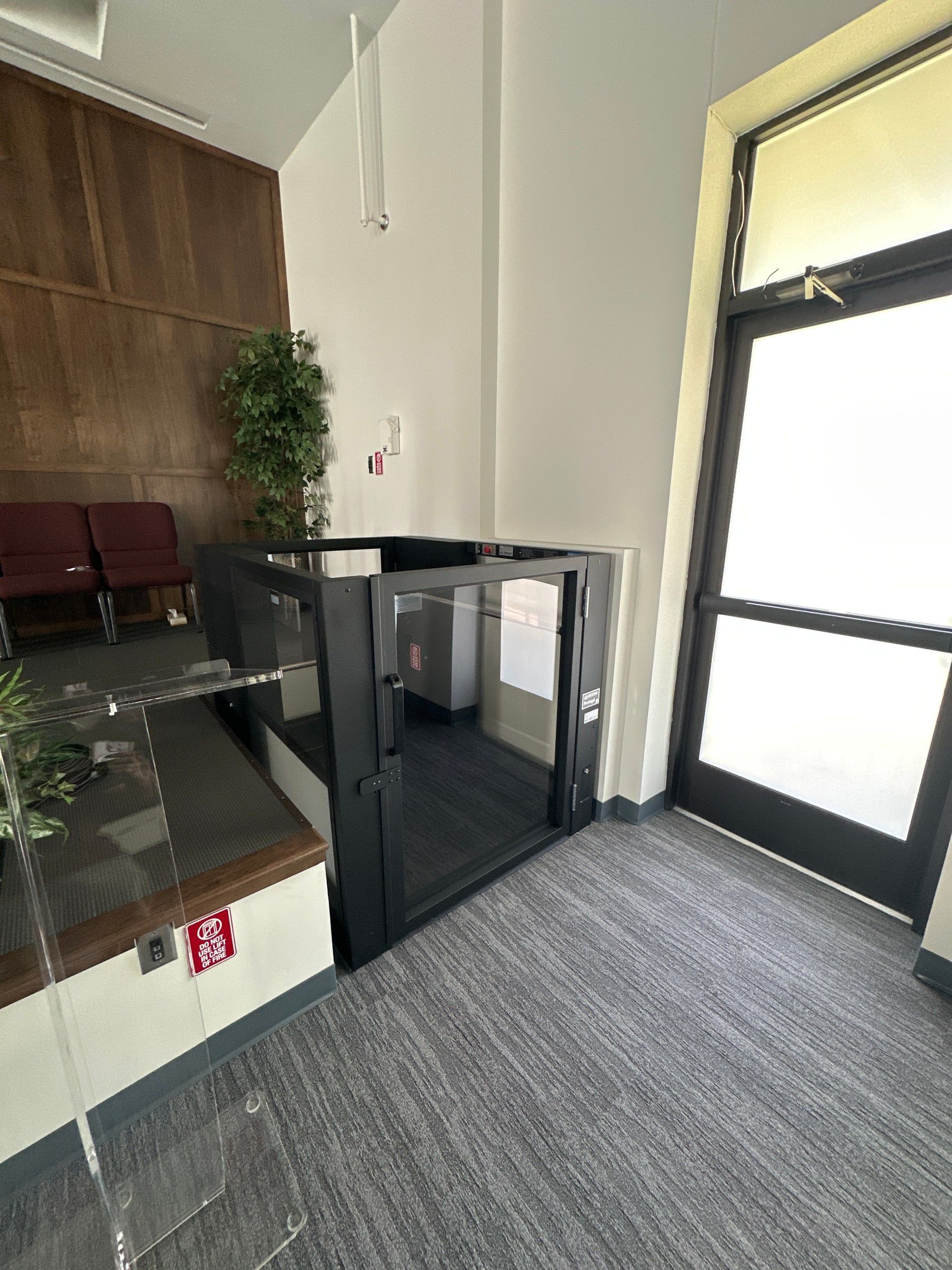
Protégé with its landing door, Harrisburg, PA 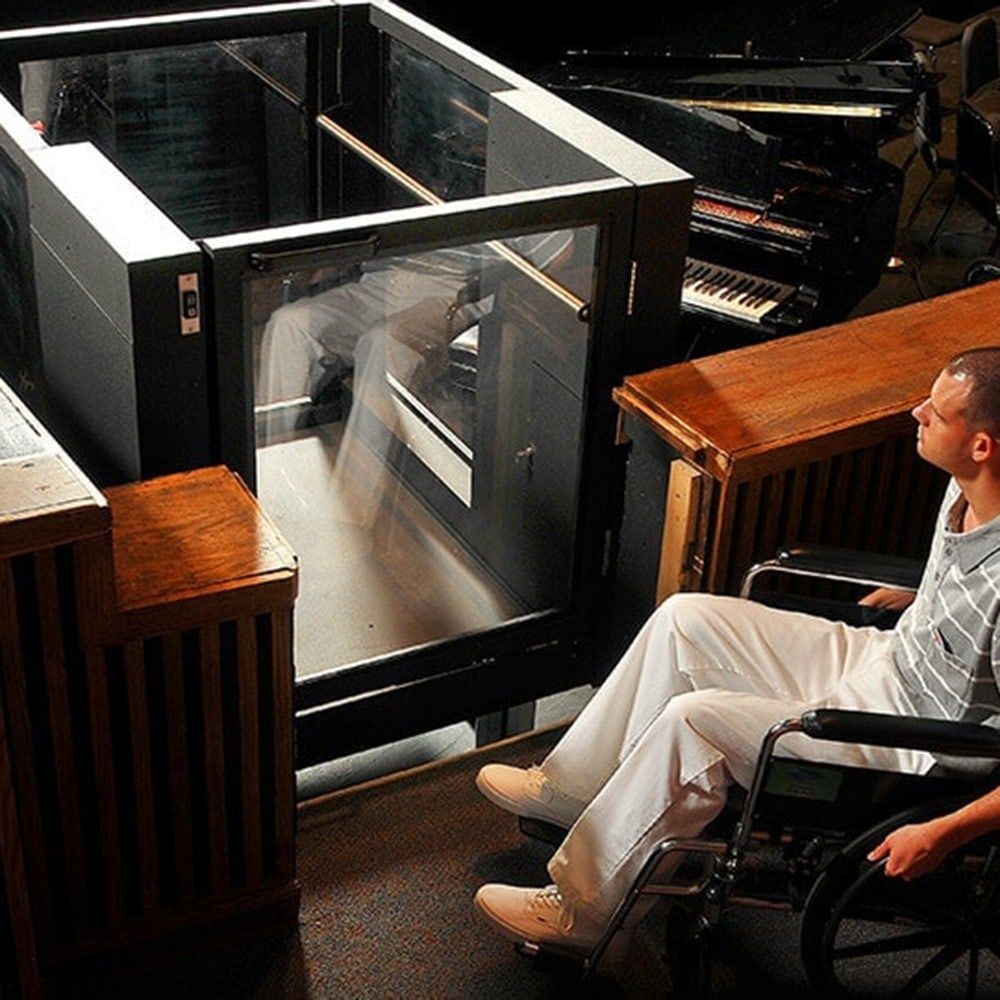
Performing area lift 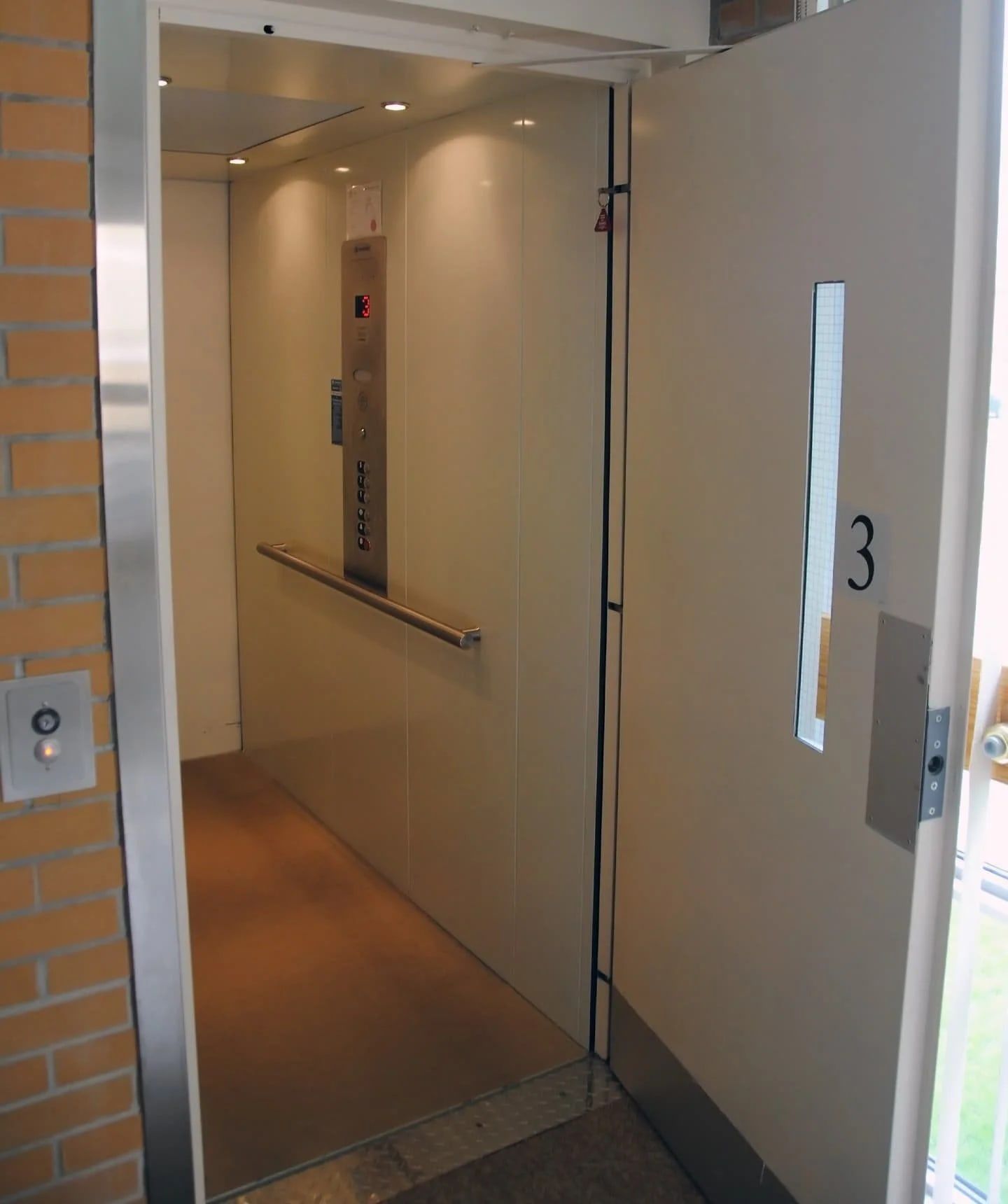
Enclosed cab with automatic door 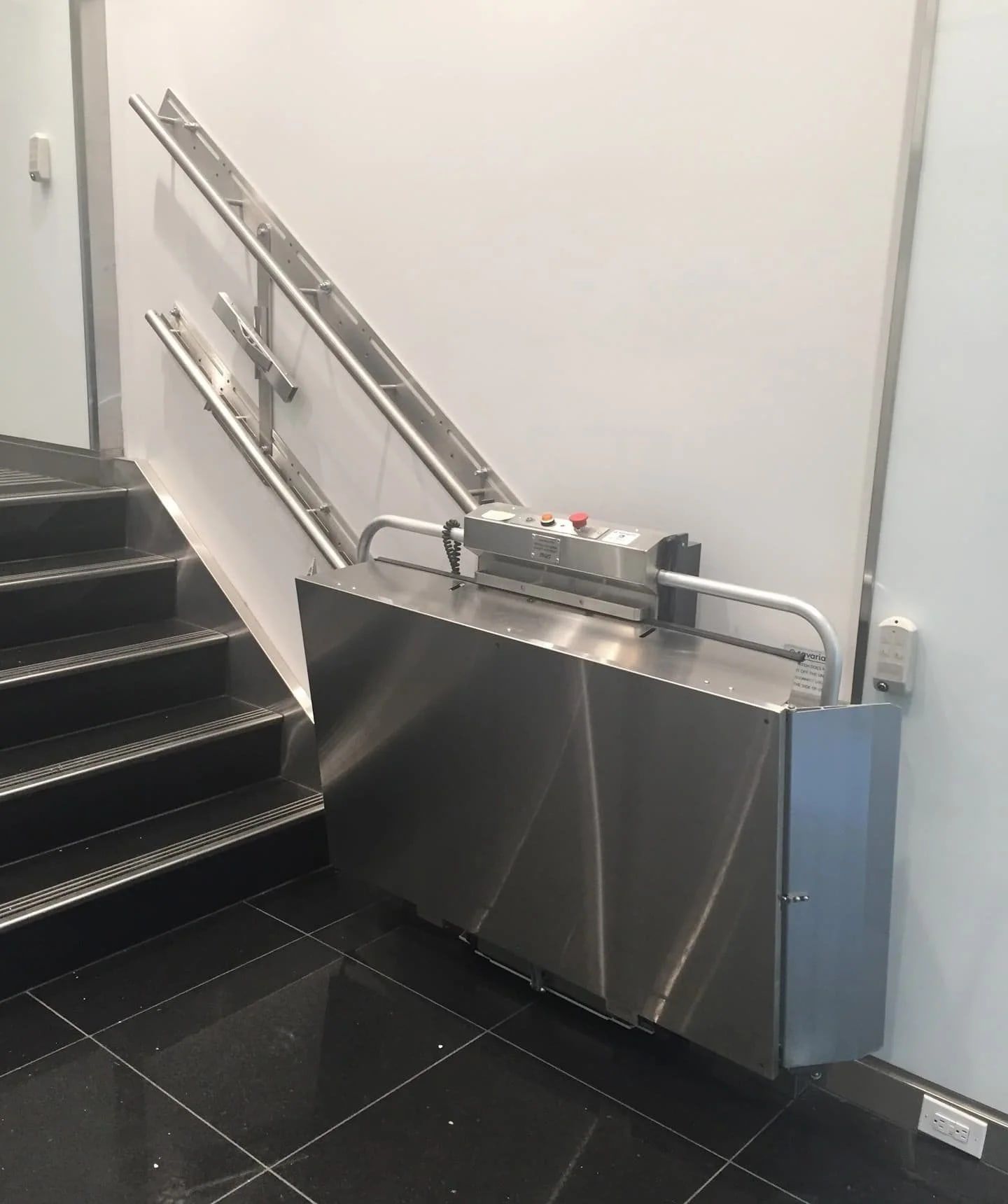
Inclined lift, clear width kept
When the ADA Standards allow a platform lift
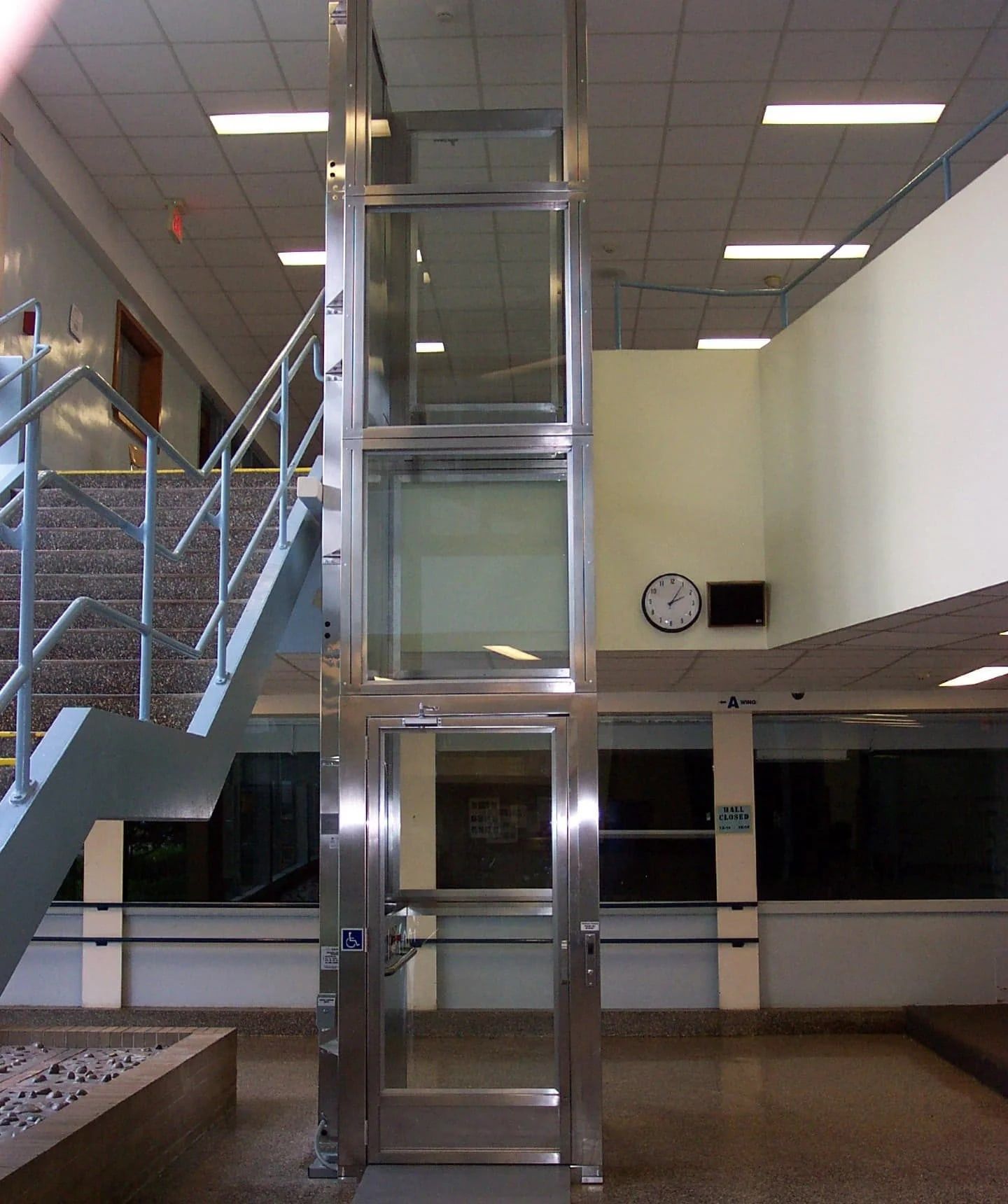
Elevators and ramps are the default parts of an accessible route. Platform lifts are allowed in new construction only in listed situations, and the ones that come up in our work are performing areas such as stages, chancels, and speaker platforms; wheelchair seating spaces in assembly areas; incidental spaces not open to the general public that hold a handful of occupants; judicial spaces such as a witness stand or jury box; and dwelling units in residential facilities. In existing buildings the rules are broader: a platform lift may be used in alterations and as a readily achievable barrier removal, which is the clause that covers most restaurants, offices, shops, and older public buildings we see.
Where a lift is used, the Standards expect it to be operable without assistance. A rider must be able to call it, open the door or gate, ride, and exit without a staff member, which rules out a lift that is locked and run by the manager on request. Keyed call stations are generally acceptable when every user who needs the lift has a key. The Standards also set clearances at the doors, clear floor space on the platform, reach ranges for the controls, and door and gate hardware, all of which the manufacturers design into the models we sell; our job is to confirm the configuration ordered matches the use.
Religious organizations and private clubs are generally exempt from the ADA's public accommodation rules, and state and local governments fall under Title II rather than Title III, which has its own program access standard. Those distinctions change what is required, not how the lift is built or permitted.
What ASME A18.1 and the state generally require
The themes are consistent even though the details move between editions. Vertical lifts in commercial buildings run inside an enclosure or a hoistway, with doors or gates at each landing interlocked so they cannot open unless the platform is there and the platform cannot move while one is open. Travel is limited; the commercial vertical lifts we install run up to 14 feet and the exact limit for a given configuration is set by the code edition in force and the state. Platforms carry obstruction sensors under the platform and on the moving edges, an emergency stop, a means to lower the platform if the power fails, and controls that need continuous pressure. Inclined lifts add rules about the clear width that remains on the steps when the lift is folded, the landings at each end, and the rail supports.
In Pennsylvania the process is a permit application with drawings to the Department of Labor and Industry, plan review and approval, installation, an acceptance test performed by the installer while a certified elevator inspector witnesses it, a Certificate of Operation, and then periodic inspections and tests for the life of the lift. The municipality issues its own building permit for the pad, the framing, and the electrical work. Maryland follows a parallel path through its elevator safety program. An inspector's letter for a specific building is the controlling document, and when it differs from what you read here, the letter wins.
Mistakes that cost buildings time and money
Ordering before the permit. A lift that arrives before the plan review is approved can be the wrong model, the wrong door configuration, or the wrong height, and the fix is a second lead time. We do not order until the state permit is in hand.
Putting the lift where it is convenient rather than on the route. A lift in a back hallway behind a locked door does not create an accessible route. The lift has to sit on the path a visitor actually takes.
Treating a residential lift as a commercial one. An open porch lift does not carry the enclosure, doors, and controls a public building needs. The same V-1504 family covers both, but the commercial package is a different order.
Assuming a church or a club is exempt from everything. The ADA exemption does not touch the state permit and inspection, which apply to any lift in a public building.
Forgetting the periodic tests. The Certificate of Operation is the start of the obligation, not the end. Our service plans bundle the recurring tests so a building is never caught at renewal.
Each of those is avoidable with a measured site visit and a conversation with the code official before the quote is signed, which is how every commercial project of ours begins.
How Keystone confirms the requirements for your project
Every commercial lift starts with a site visit. We measure the rise and the landings, trace the route a visitor takes from the parking lot or the sidewalk to the destination, note the power and the floor construction, and photograph the space. We then identify the lift and configuration that fits and raise any code questions with the municipal code official and, where needed, the state before the quote is final. The written quote, delivered within 24 hours of the visit, states the lift, the enclosure or hoistway requirement, the work by others, and the permit and inspection on their own line. We prepare and file the state application and drawings, hand you the local permit package, install in two to five days, perform the witnessed acceptance test, and handle the Certificate of Operation.
We have been doing this for 14 years and have references for a sanctuary stage lift in Harrisburg, a school district lift with the commercial package, and an enclosed two-stop commercial lift, and we are glad to walk through any of them. For the building types, see churches, schools, businesses, restaurants and retail, apartments and multifamily, and municipal buildings; for the rail-mounted inclined option, inclined platform lifts. The overview is at commercial wheelchair lifts, and our blog covers whether a wheelchair lift needs a permit. Nothing on this page is legal advice; for a determination about your obligations, consult the code official and your attorney.
Our own installs
Recent platform lift installations
Our own platform lift installations, residential and commercial, pulled live from the jobs we finished most recently.
Google reviews
What customers say after the install
Pulled live from our Google Business Profile. We show the name the reviewer used, shortened to a first name and initial.
More commercial lift pages
Lifts by building type
Start at the overview: commercial wheelchair lifts covers the lineup, the code, and the permit process in one place.
- Wheelchair lifts for churches
- Wheelchair lifts for schools
- Wheelchair lifts for businesses
- Wheelchair lifts for municipal buildings
- Wheelchair lifts for inclined platform lifts
- Wheelchair lifts for restaurants and retail
- Wheelchair lifts for apartments and multifamily
Commercial lifts by city
- Commercial wheelchair lifts in Harrisburg, PA
- Commercial wheelchair lifts in Lancaster, PA
- Commercial wheelchair lifts in York, PA
- Commercial wheelchair lifts in Chambersburg, PA
- Commercial wheelchair lifts in Columbia, PA
- Commercial wheelchair lifts in Dover, PA
- Commercial wheelchair lifts in Hershey, PA
- Commercial wheelchair lifts in Hummelstown, PA
- Commercial wheelchair lifts in Lebanon, PA
- Commercial wheelchair lifts in Mechanicsburg, PA
Residential lifts are on the vertical platform lifts page and the full lineup on all platform lifts. Related reading: what a vertical platform lift is, ramp versus platform lift. Or call (717) 219-7976.
Straight answers
ADA and platform lifts: common questions
Is a platform lift ADA compliant?
A lift is not compliant by itself; an accessible route is. The ADA Standards allow a platform lift as part of that route in listed situations and in existing buildings, provided it is usable without assistance and meets A18.1. Whether a particular lift in a particular spot satisfies the Standards is confirmed for each project with the code official, which is what we do before ordering.
Does a wheelchair lift need a permit in Pennsylvania?
In any commercial or public building, yes: a Department of Labor and Industry permit before installation, a local building permit, a witnessed acceptance test, and a Certificate of Operation before use, followed by periodic inspections. Residential lifts in a private home are generally outside the state lift permit, though a township building permit may apply.
Can staff operate the lift for customers instead of leaving it open?
The ADA Standards expect a platform lift on an accessible route to be operable without assistance, so a lift that only runs when an employee is fetched generally does not meet that expectation. A keyed call station can be acceptable when every user who needs the lift has a key.
Are churches exempt from these rules?
Religious organizations are generally exempt from the ADA's public accommodation requirements, but not from the Pennsylvania or Maryland permit and inspection rules, which apply to any lift in a building the public uses. Most congregations install lifts voluntarily and go through the same state process.
Where does the ADA allow a platform lift in new construction?
In a short list of places, including performing areas such as stages, wheelchair seating in assembly areas, small incidental spaces, judicial spaces, and residential dwelling units. Existing buildings have broader allowances in alterations and barrier removal. The code official confirms which clause covers your project.
Will Keystone guarantee the lift passes inspection?
We guarantee our own work and we specify the lift to the drawings the state approved, which is why our acceptance tests are routine. We do not promise what an inspector or a court will decide about a building, because that depends on the code edition, the jurisdiction, and facts about the building we may not control.
Free in-home consultation
Not sure what your building needs?
Call and describe the building and the level change. We will measure, raise the code questions with your code official, and send a written quote with the state permit and inspection as their own line, within 24 hours, including weekends.