
Sold, installed, and serviced by our own team
Commercial wheelchair lifts, permitted and inspected
A commercial platform lift gets a wheelchair user onto a stage, into a fellowship hall, or through a split-level entrance for a fraction of what an elevator costs. We install Savaria, Ascension, and Harmar lifts in churches, schools, offices, and public buildings across central Pennsylvania and northern Maryland, and we handle the Pennsylvania Department of Labor and Industry permit and the witnessed acceptance test as part of the job.
What counts as a commercial wheelchair lift
Any platform lift in a building the public uses is commercial in the eyes of the code: a church, a school, a doctor's office, a restaurant, a borough hall, a fire company social hall. The lift itself may be the same Savaria V-1504 we put on a home porch, but in a public building it carries an enclosure or a hoistway, interlocked doors at every landing, and a state permit before it is ordered and an inspection before anyone rides it.
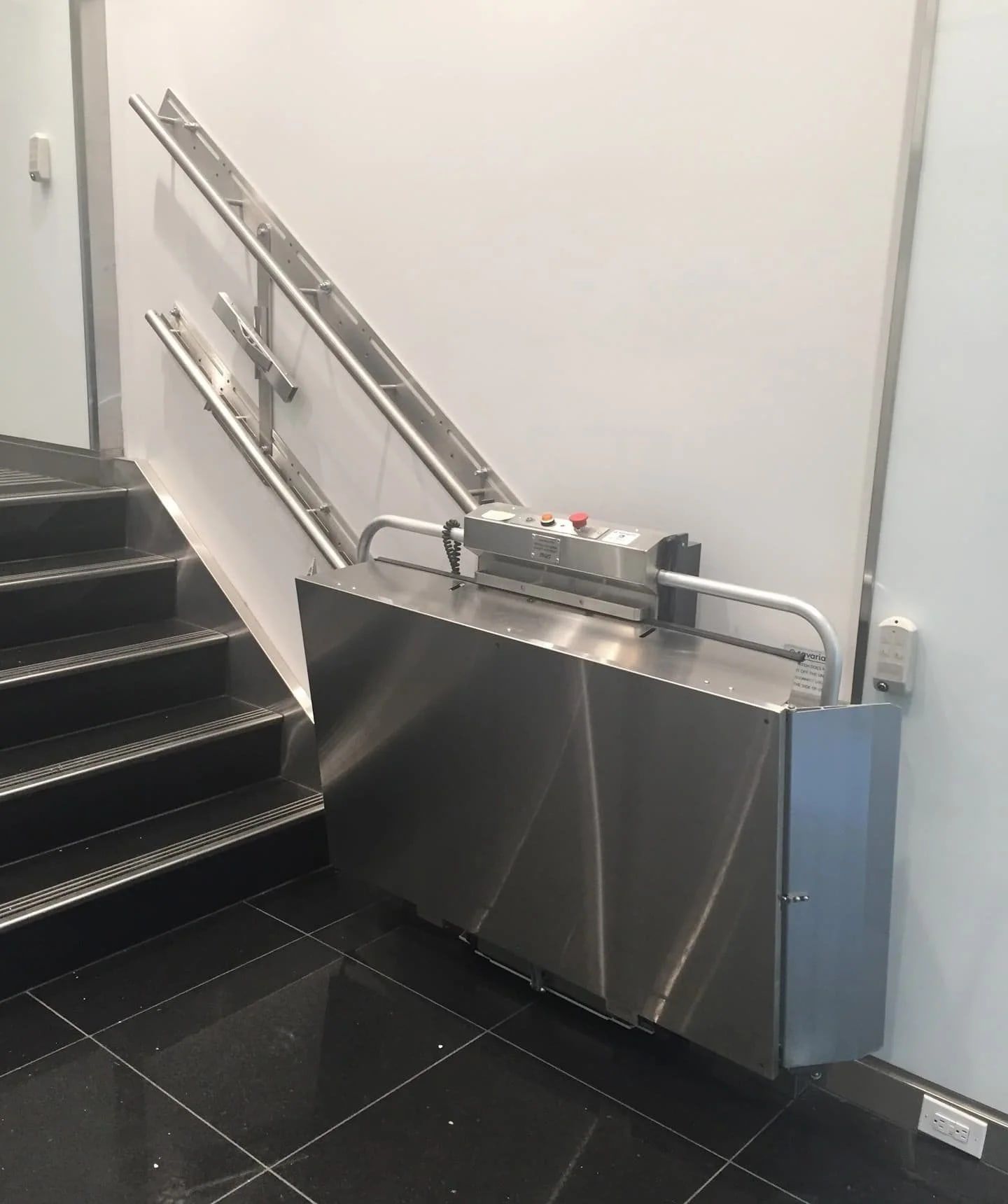
Vertical platform lifts travel straight up, from a few inches for a stage to 14 feet for a full story. Inclined platform lifts ride a straight staircase on a rail and fold flat against the wall when parked. Between the two, almost every one or two level accessibility problem in an existing building has an answer that does not involve building an elevator shaft.
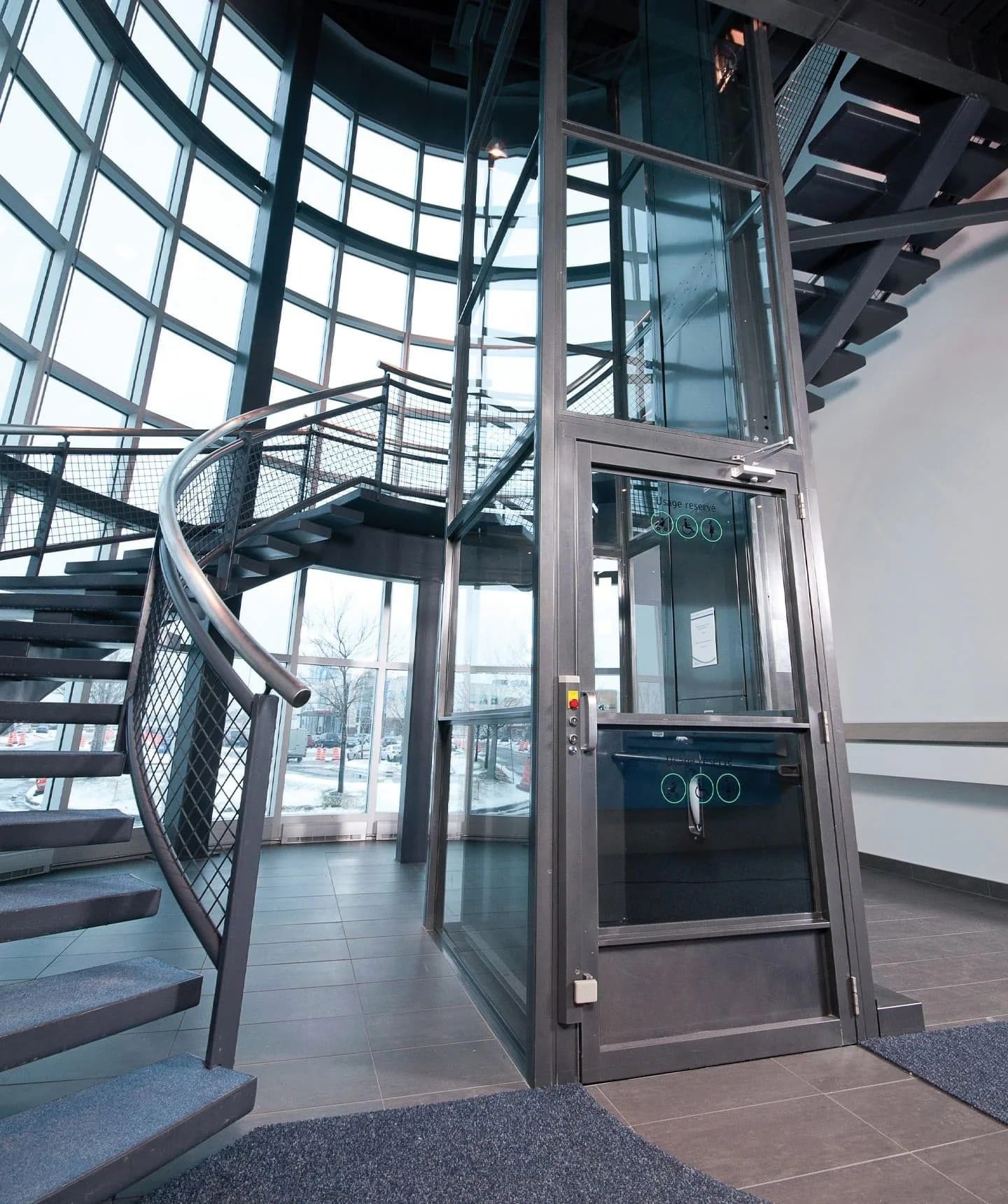
We have installed lifts in a Harrisburg church sanctuary, a school district in the northern tier, and an enclosed two-stop lift in a commercial building, and we service everything we sell. Darrell has 14 years in the accessibility trade, and the company has 1000+ installations across 100+ towns with 5 star reviews on Google.
Why buildings in PA and MD choose us for a commercial lift
Permit first, then the order
We file the Pennsylvania state permit and get it approved before the lift is ordered. No surprises at inspection because the inspector already reviewed the drawings.
We perform the witnessed test
The acceptance test and the periodic tests are done by our technicians in front of the inspector. One company for the lift, the paperwork, and the service afterward.
Lower cost than an elevator, honestly priced
A platform lift solves most one and two level problems for far less than a LULA. When a ramp would do the job for less, we say so and price the ramp.
Lifts by building type
Each page covers the level changes that building usually has, the lifts that fit, what it costs compared with an elevator, and how the permit and inspection run.
Platform lift or elevator
For one or two levels, the platform lift wins on construction, schedule, and cost. We will say so if your building truly needs an elevator.
| Question | Platform lift | LULA or passenger elevator |
|---|---|---|
| Travel | Up to 14 feet | Multiple stories |
| Pit | Shallow pit or a short ramp | Deep pit |
| Machine room | None; drive is in the tower or cab | Machine room or machine space |
| Hoistway | Enclosure or a simple framed hoistway | Fire-rated hoistway |
| Installation | Two to five days | Weeks, after months of construction |
| Permit and inspection | State permit, witnessed test, certificate | State permit, witnessed test, certificate |
| Relative cost | Lower | Several times higher |
Commercial lifts by city
Local pages for the three cities where we install the most commercial lifts. Every other town in central Pennsylvania and northern Maryland is covered from the same routes.
Commercial lifts in place
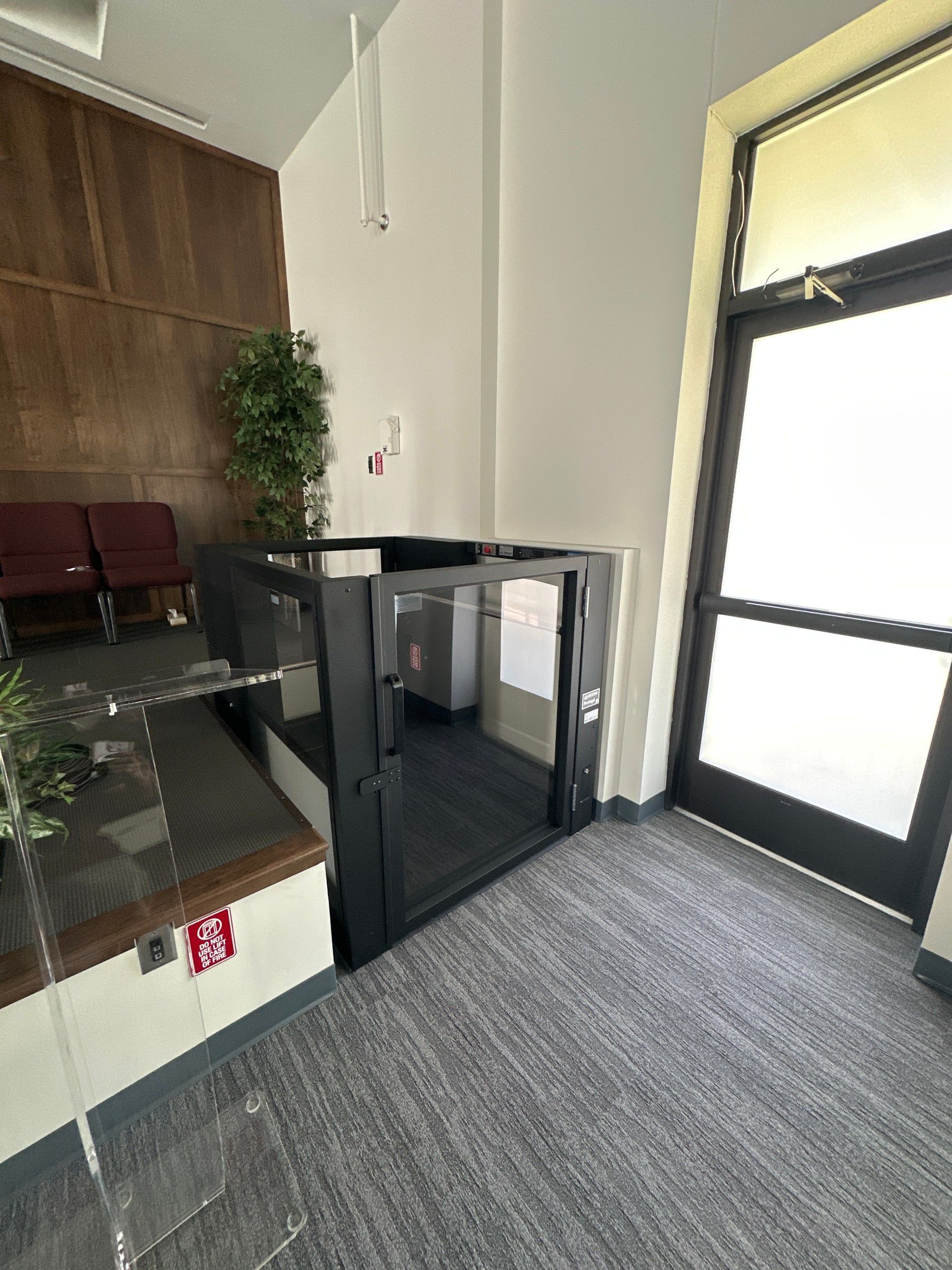
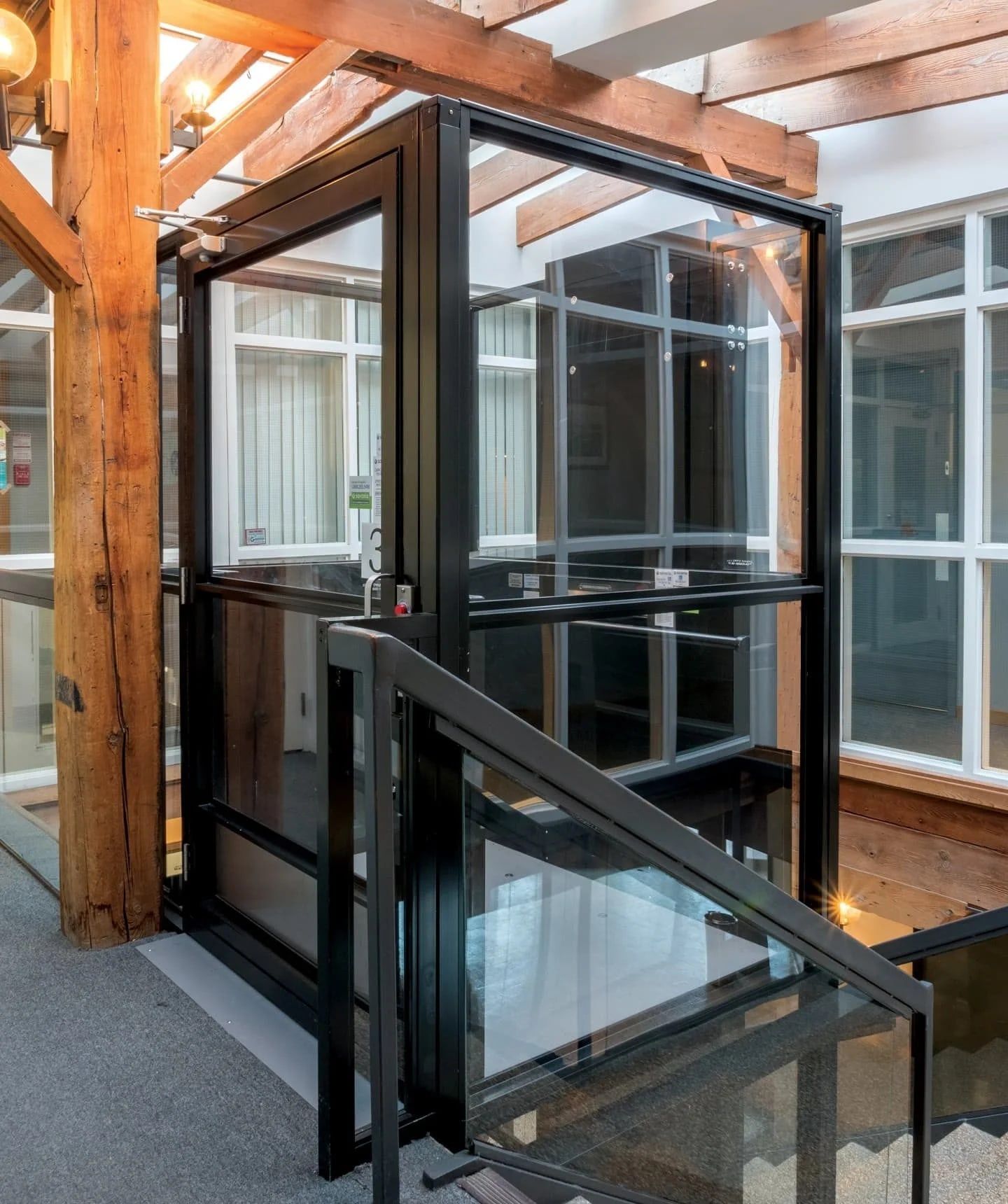
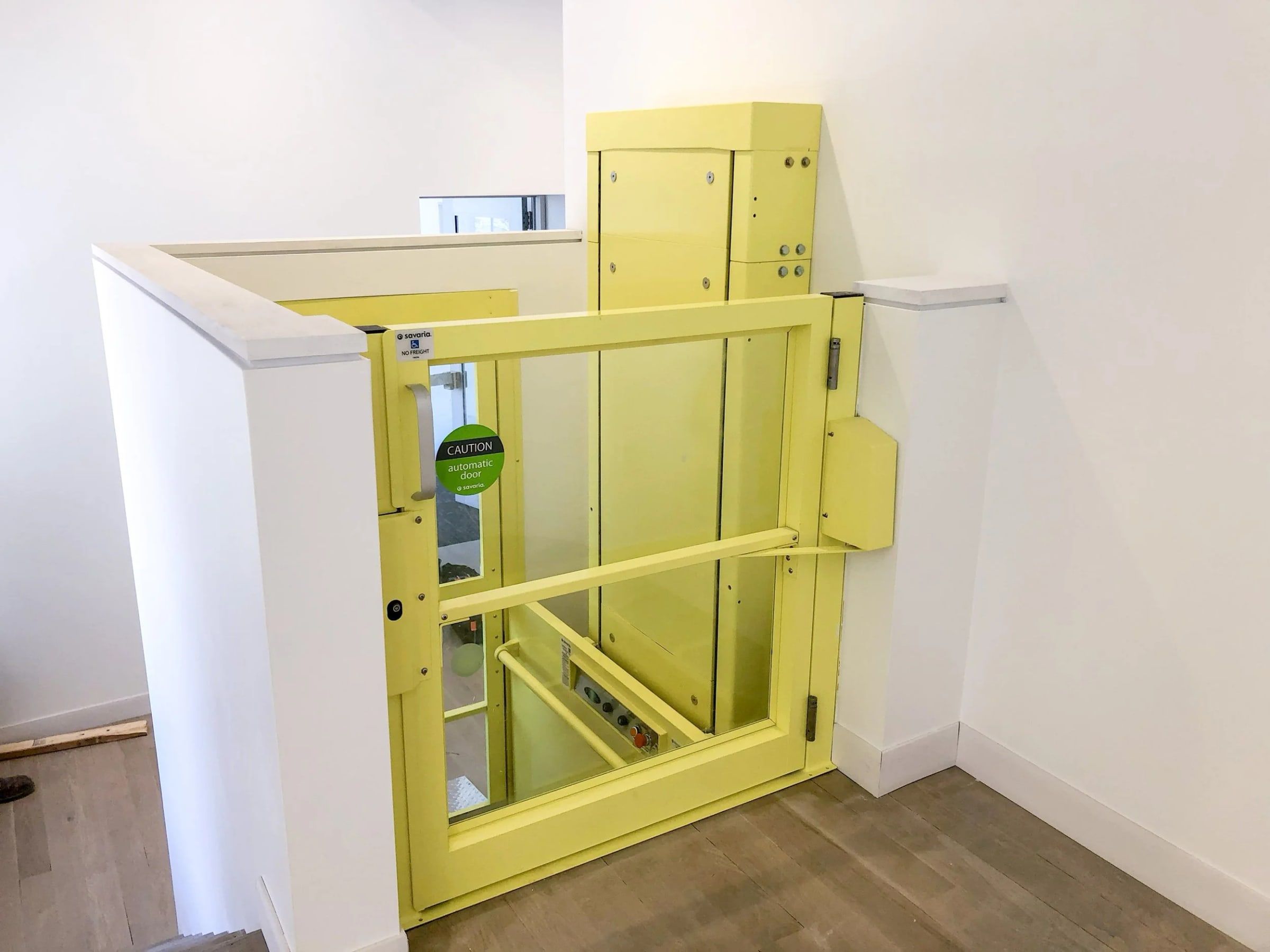
Enclosed V-1504, Harrisburg, PA 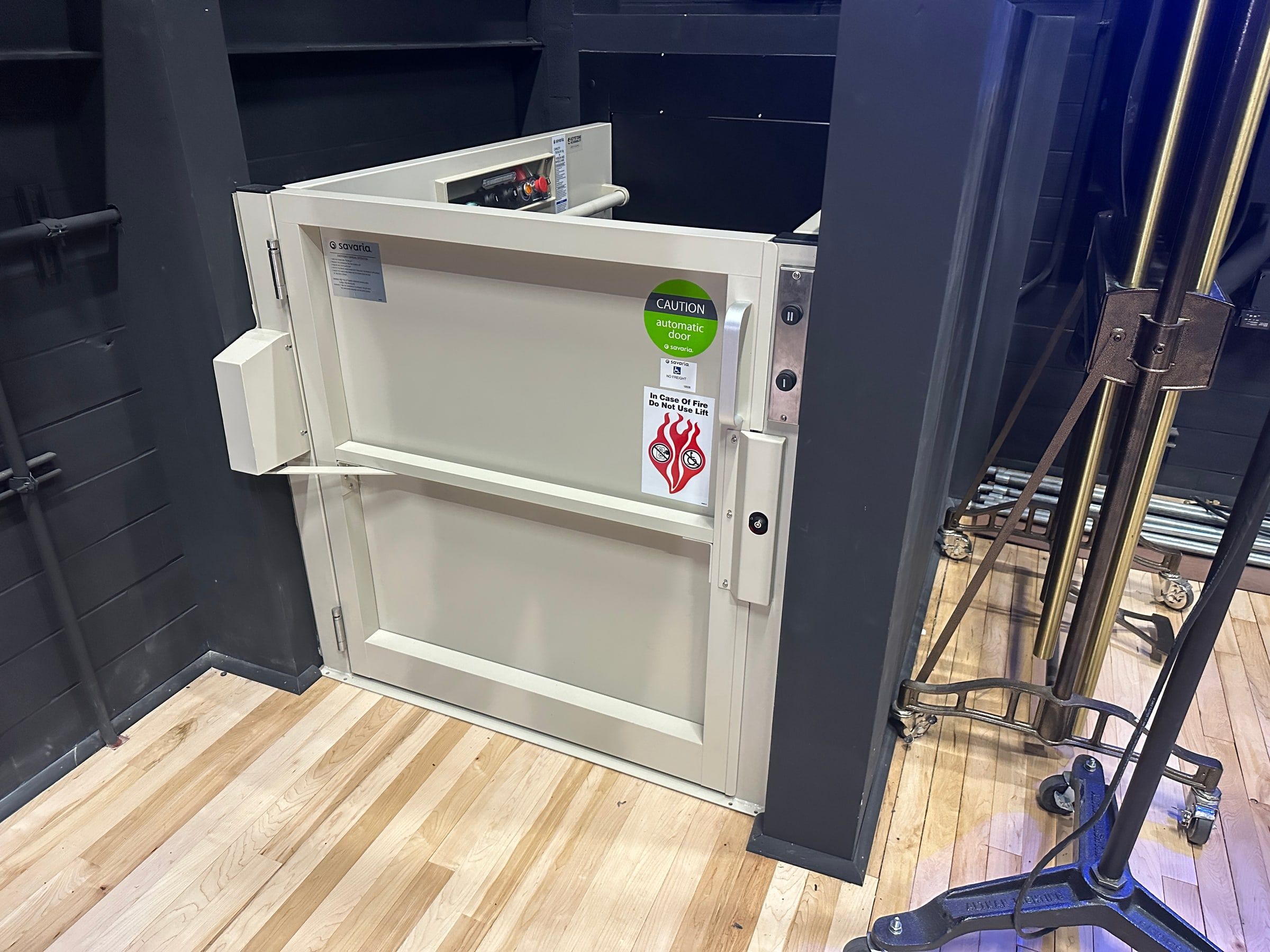
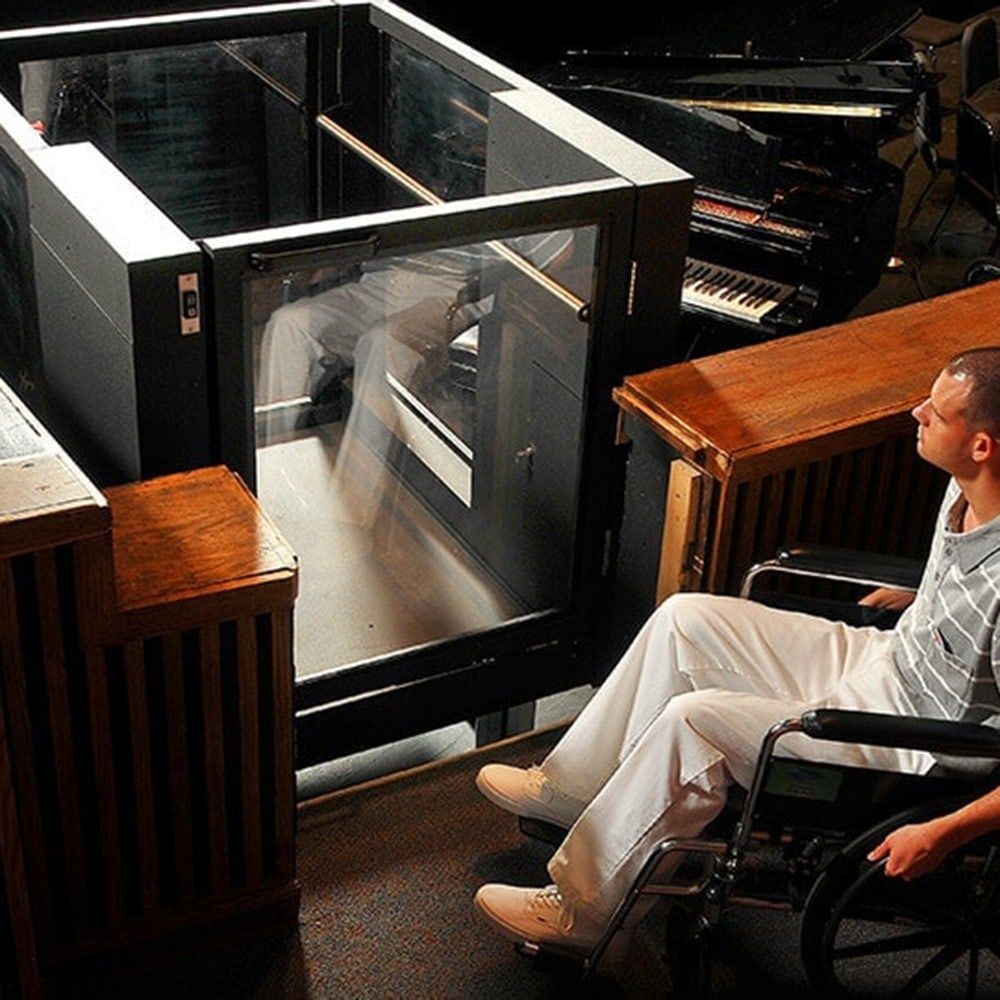
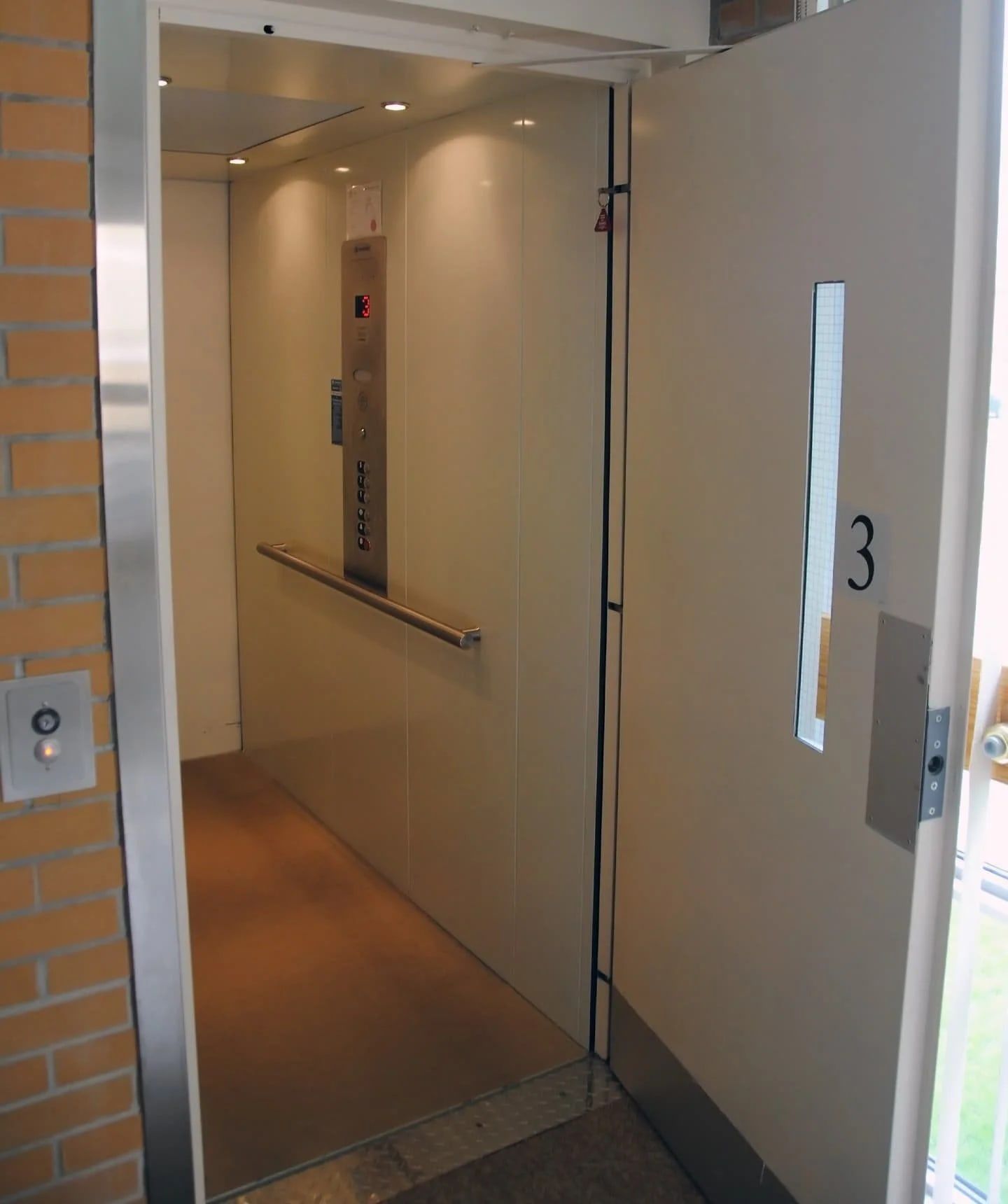
V-1504, Hershey, PA Ascension Protege at a stage Enclosed V-1504, indoor commercial Prolift enclosed cab 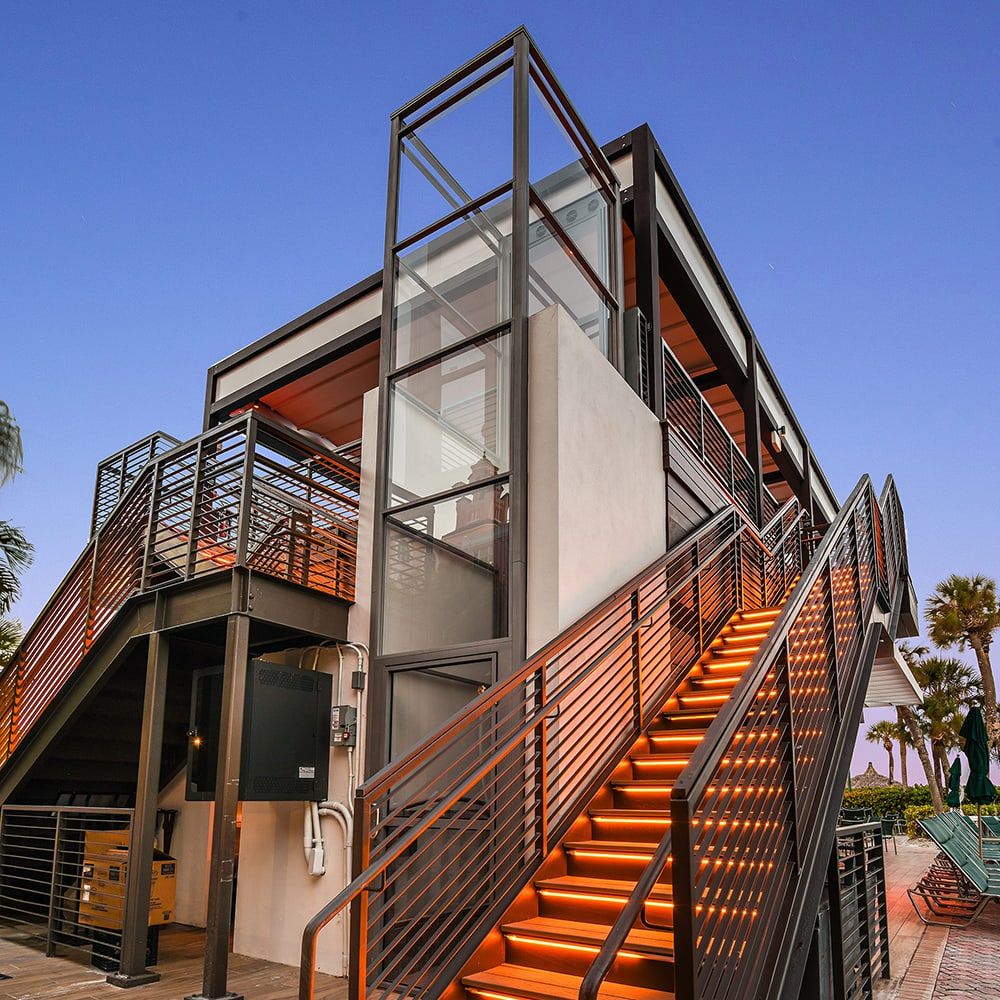
Ascension Clarity, outdoor Delta inclined lift, parked
The lifts we install in commercial buildings
Savaria V-1504 with the commercial package: hydraulic, 750 lb, up to 14 feet of travel, in an aluminum and acrylic enclosure outdoors or a framed hoistway indoors, with interlocked landing doors. The lift we recommend first for entrances, fellowship halls, and split levels.
Savaria Prolift: an enclosed cab with automatic doors, 750 to 1,400 lb, 30 feet per minute. For lobbies and offices where the owner wants the lift to feel like a small elevator.
Ascension Protege and Virtuoso: low-rise lifts for stages, choir lofts, and raised floors. They sit on the finished floor with no pit and no ramp, which makes them the usual answer for a chancel or a cafetorium stage. Ascension Clarity is the enclosed outdoor version.
Savaria Multilift enclosed: a screw-drive lift for rises up to 72 inches, available in a 72 inch enclosed model that meets commercial code for short entries.
Savaria Delta inclined platform lift: for a straight staircase with no floor space beside it. 550 lb, battery powered, folds flat. See inclined platform lifts for when it fits.
Platform lift or elevator: the cost difference
A LULA elevator or a small passenger elevator needs a hoistway with a deep pit, a machine room or machine space, fire-rated construction, and an elevator contractor's schedule. A commercial platform lift needs a shallow pit or a short ramp, a dedicated 120V circuit, and either an enclosure or a simple framed hoistway. The lift arrives mostly assembled and is installed in two to five days. That is why a platform lift is often the lower cost alternative to a LULA for one or two levels, and why most of the churches and nonprofits we talk to end up with one.
Residential porch lifts typically run in the low to mid five figures installed. Commercial lifts cost more because of the enclosure, the interlocked doors, and the permit and inspection, and the exact number depends on travel height, how many landings, and whether the lift is indoors or out. We quote after a site visit, in writing within 24 hours, with the state permit and initial inspection shown as their own line so nothing is hidden. Our blog post on what a vertical platform lift costs walks through the factors.
ADA, ASME A18.1, and the Pennsylvania Uniform Construction Code
Three sets of rules meet at a commercial lift. The ADA Standards for Accessible Design say where a platform lift may be used as part of an accessible route and require that it be usable without an attendant, with unassisted entry and exit. ASME A18.1, the Safety Standard for Platform Lifts and Stairway Chairlifts, sets the construction and safety requirements: enclosures, interlocks, travel limits, controls, and testing. Pennsylvania adopts A18.1 through the Uniform Construction Code, which is administered by the Department of Labor and Industry, so every commercial lift in the state is permitted, inspected, and periodically re-inspected under that framework.
In practice that means a plan review and state permit before the lift is ordered, a local building permit from the municipality, an acceptance test performed by us and witnessed by a certified elevator inspector, and a Certificate of Operation before the lift goes into service. After that, periodic inspections continue for the life of the lift. Maryland runs the same national standard through its own elevator safety unit, and we are licensed there as well. We keep these statements general on purpose; the inspector's letter for your building is what governs, and we read it with you.
How a commercial lift project runs
1. Site visit and written quote. We measure the rise, look at the landings, the floor, the power, and the path to the lift, and send a quote with the lift, the enclosure or hoistway requirements, and the permit line.
2. Permit before the order. We prepare the Labor and Industry application, the drawings, and a work-by-others checklist for your contractor: pad or pit, framing, the electrical circuit, and which landings need which doors. Nothing is ordered until the state permit is in hand, so the lift that arrives is the lift the state approved.
3. Installation. Two to five days by our own employees, scheduled around services, classes, or office hours.
4. Witnessed test and certificate. We run the acceptance test in front of the inspector and handle the certificate paperwork.
5. Service. Platform lift service calls are a flat rate plus mileage, never hourly, and our service plans bundle the periodic tests the state requires. Read more about permits for a wheelchair lift.
Our own installs
Recent platform lift installations
Our own platform lift installations, residential and commercial, pulled live from the jobs we finished most recently.
Google reviews
What customers say after the install
Pulled live from our Google Business Profile. We show the name the reviewer used, shortened to a first name and initial.
Commercial lifts by building type
- Wheelchair lifts for churches
- Wheelchair lifts for schools
- Wheelchair lifts for businesses
- Wheelchair lifts for municipal buildings
- Inclined platform lifts
Commercial lifts by city
- Commercial wheelchair lifts in Harrisburg, PA
- Commercial wheelchair lifts in Lancaster, PA
- Commercial wheelchair lifts in York, PA
Residential lifts are on the vertical platform lifts page and the full lineup on all platform lifts. Related reading: what a vertical platform lift is, ramp versus platform lift. Or call (717) 219-7976.
Straight answers
Commercial wheelchair lifts: common questions
Does a commercial wheelchair lift need a permit in Pennsylvania?
Yes, every time. A lift in a public or commercial building needs a Department of Labor and Industry permit before installation, a local building permit, a witnessed acceptance test, and a Certificate of Operation before use. We handle the state side and prepare the paperwork for the local permit.
How much does a commercial platform lift cost compared with an elevator?
A platform lift is usually a fraction of the cost of a LULA or passenger elevator because it needs no deep pit, no machine room, and far less construction. The exact number depends on travel, landings, and enclosure, and we quote it in writing within 24 hours of the site visit.
Can a platform lift be part of an ADA accessible route?
In specific situations, yes. The ADA Standards allow platform lifts for stages and performing areas, for existing buildings, and in a handful of other cases, and require the lift to be usable without an attendant. We confirm the allowed use for your building with the code official before anything is ordered.
How long does a commercial lift take from quote to first ride?
Installation is two to five days. The schedule is set by the state plan review before the order and the lift's factory lead time, then the inspection after installation. We give you a realistic timeline at the quote and an expedited option when the building has a deadline.
Do you install LULA elevators?
We focus on platform lifts, which are often the lower cost alternative to a LULA for one or two levels. If your building truly needs an elevator, we will tell you so at the site visit rather than sell you the wrong lift.
Do you serve Maryland buildings too?
Yes. We are licensed for Maryland lift work, and Maryland buildings follow the same ASME A18.1 standard through the state elevator safety unit. The permit and inspection desks differ from Pennsylvania's, and we know both.
Need a lift for a church, school, office, or public building?
Call and tell us the rise, where it sits, and what the building is used for. We will come measure and send a written quote within 24 hours with the state permit and inspection included as their own line.