
Commercial wheelchair lifts
Wheelchair lifts for municipal buildings: borough halls, fire halls, libraries
Borough halls, township buildings, fire company social halls, libraries, and senior centers across central Pennsylvania share a problem: a meeting room or a polling place up a half flight in a building that predates accessibility codes. Under Title II of the ADA, local governments must make their programs accessible, and a platform lift is usually the lowest cost way to do it in an existing building. We handle the Labor and Industry permit and the witnessed inspection so the lift is certified before the next council meeting.
Public buildings and Title II
State and local governments fall under Title II of the ADA, which requires that programs, services, and activities be accessible to people with disabilities. A council meeting, a tax office, a polling place, or a library story hour on a level a wheelchair cannot reach is a program that is not accessible. Title II allows governments to meet that duty by relocating the program or by making the building accessible, and in most borough and township buildings a lift is far less disruptive than moving the meeting room.
The buildings we see most: a borough hall with the council chamber up six steps, a township building with a basement meeting room, a fire company social hall with a stage and a raised bar, a library in a converted house, and a senior center in a former school. Each has a level change of a few feet, a tight budget, and a board that meets once a month and wants one clear number.
Why municipalities work with us
One number for the board
A written quote with the lift, the site requirements, and the state permit and inspection on their own line, ready for an agenda or a grant file.
Permit and test handled
We file the Labor and Industry permit, prepare the local permit package, and perform the witnessed acceptance test.
Fits a budget year
Two to five days of installation and no elevator construction, so the project closes in one fiscal year instead of three.
Commercial lifts in place
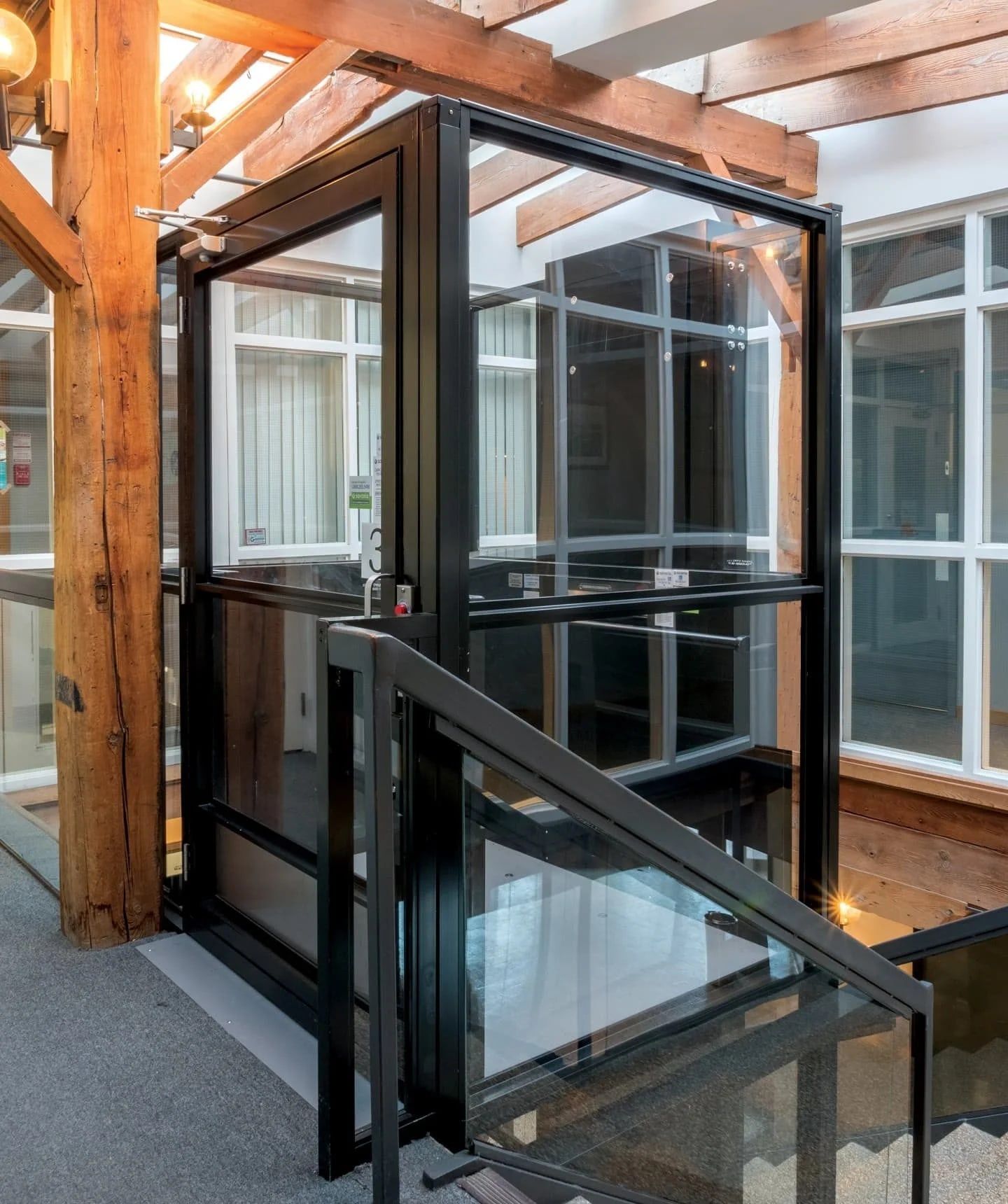
Enclosed V-1504 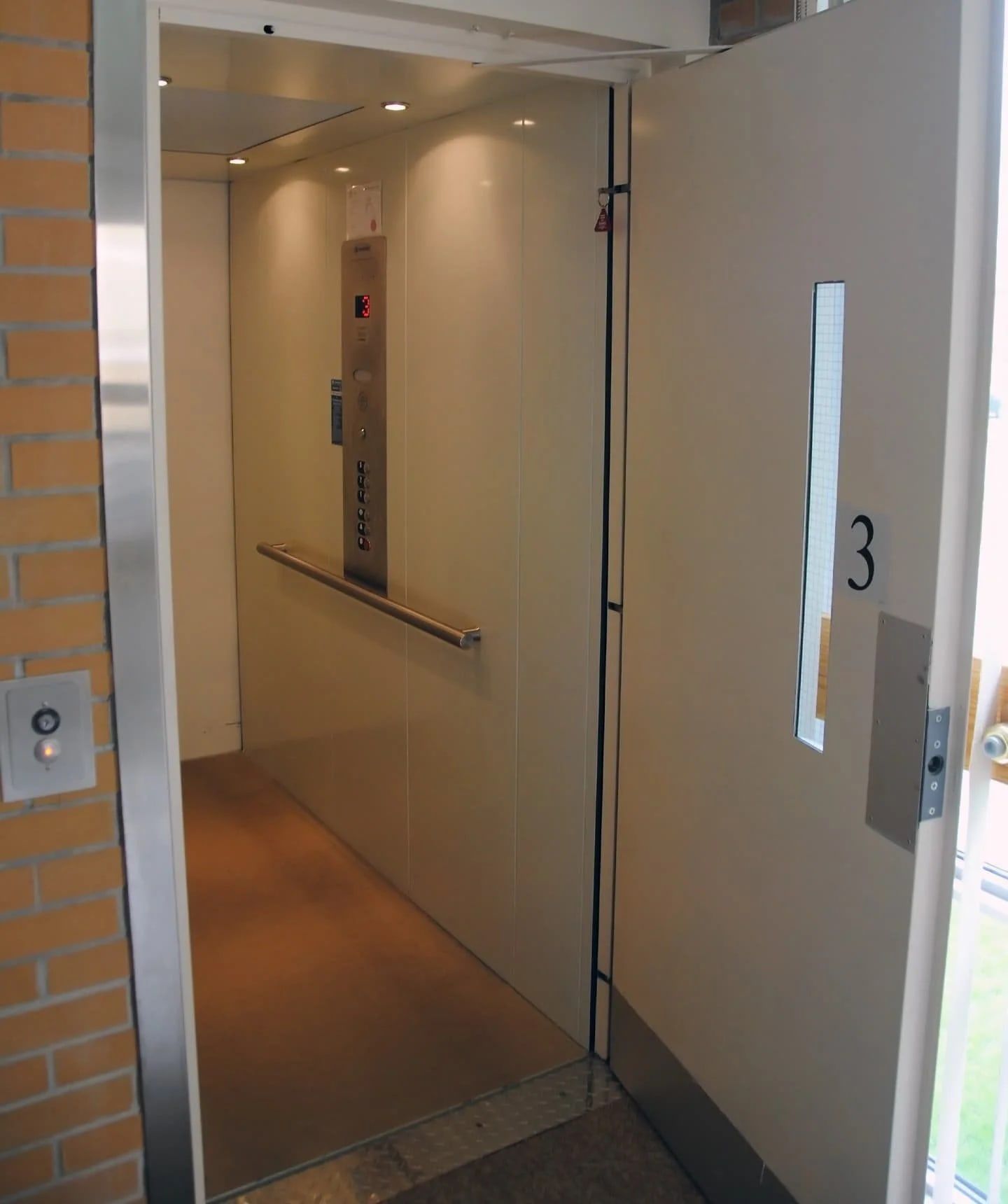
Prolift cab 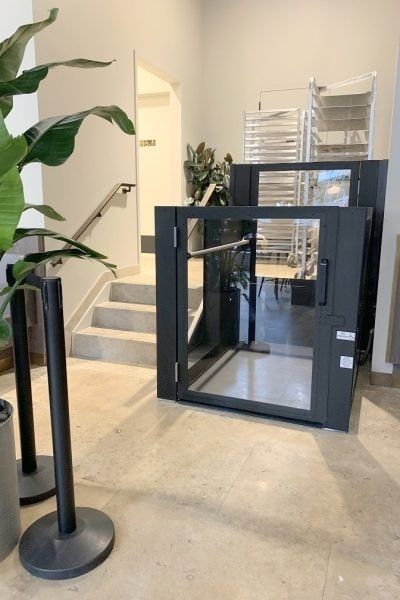
Protege, dais or stage 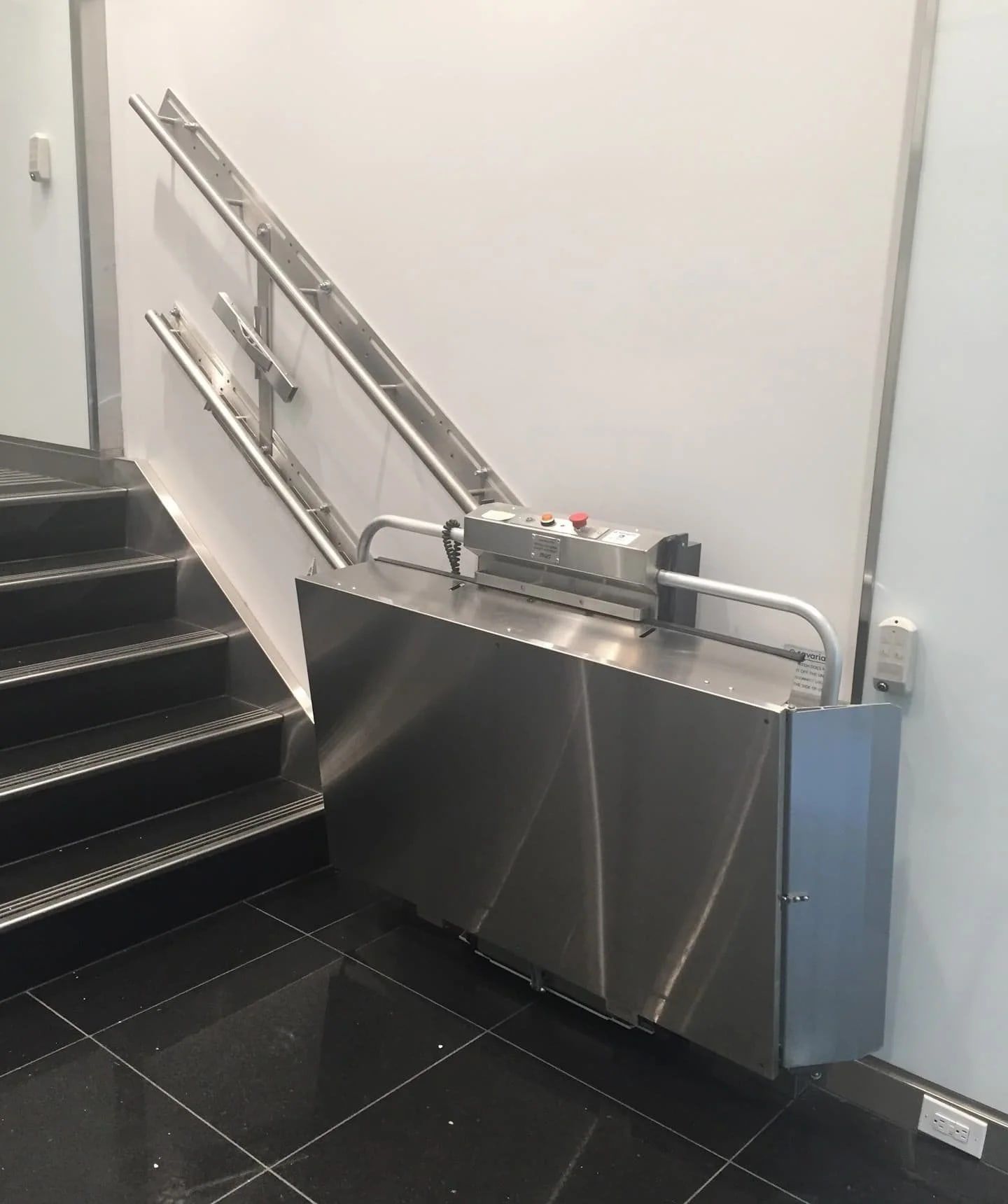
Delta, folded
Lift options for municipal buildings
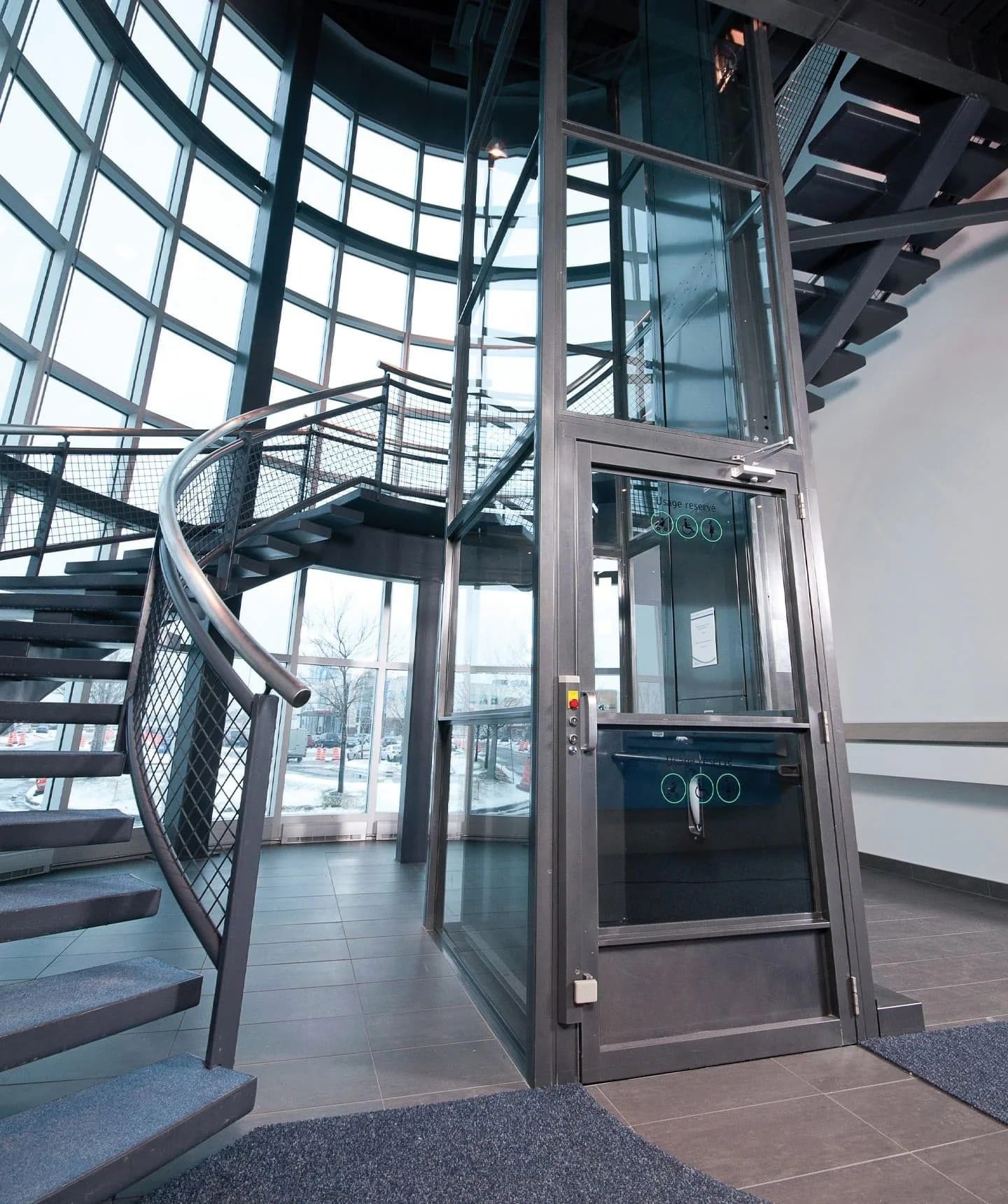
Entrances and half flights: the Savaria V-1504 with the commercial package, enclosed outdoors or in a framed hoistway indoors, 750 lb, up to 14 feet of travel, with interlocked doors at each landing. It is the lift you see in schools and churches across the region, and parts are stocked.
Lobbies and public counters: the Savaria Prolift, an enclosed cab with automatic doors and finishes that suit a public lobby, 750 to 1,400 lb.
Council dais, stage, or raised floor: Ascension Protege or Virtuoso, set on the finished floor with no pit or ramp.
Straight stairwells: the Savaria Delta inclined lift, which folds flat against the wall so the stair keeps its egress width when no one is riding.
Short rises: a 72 inch enclosed Multilift, or a modular ramp when the rise is under about 30 inches and there is room.
The budget case: lift versus elevator
Elevator quotes stall municipal accessibility projects for years. A LULA or passenger elevator in an existing borough hall means a hoistway with a deep pit, a machine room, fire-rated construction, an elevator contractor, and a general contractor, with the building partly closed for the duration. A commercial platform lift needs a shallow pit or a short ramp, a dedicated 120V circuit, and an enclosure or a simple framed hoistway. Installation is two to five days. For a one or two level building it is nearly always the lower cost alternative to a LULA, and it fits inside a single budget year.
Commercial lifts cost more than residential porch lifts because of the enclosure, the doors, and the state permit and inspection, and the figure depends on travel and landings. We provide a written quote within 24 hours of the site visit with the permit and initial inspection as their own line, in a format that works for a council agenda, a purchasing file, or a grant application. Our post on vertical platform lift cost covers the factors.
Code and permits for government buildings
Municipal lifts follow ASME A18.1 as adopted by the Pennsylvania Uniform Construction Code and are permitted through the Department of Labor and Industry like any commercial lift: plan review and a state permit before the order, a local building permit, installation, an acceptance test performed by our technician and witnessed by a certified elevator inspector, and a Certificate of Operation before public use. Periodic inspections follow, and our service plans include the tests.
The ADA Standards also apply: the lift must be usable without an attendant, with unassisted entry and exit and controls reachable from a wheelchair, and it may serve as the accessible route in an existing building and for raised areas like a dais or stage. Municipalities often have their own code official; we coordinate the local permit with that office while we file the state side. Read more about permits for a wheelchair lift.
Working with boards, bids, and schedules
We are used to the municipal rhythm: a site visit, a written quote the manager can take to the board, questions at the meeting, a vote, then the permit. Where a project must be bid, our quote is written with the specifications a solicitor can use. Installation is scheduled around meetings and elections, and pad or hoistway work is done beforehand by the municipality's contractor from our drawings or by ours. We walk staff through the controls, the key switch if one is fitted, manual lowering, and the emergency stop before we leave.
From Etters we serve boroughs and townships in Dauphin, Cumberland, York, Lancaster, Lebanon, Perry, Adams, and Franklin counties routinely, and Maryland towns in Carroll, Frederick, and Washington counties. City pages: Harrisburg, Lancaster, York.
Our own installs
Recent platform lift installations
Our own platform lift installations, residential and commercial, pulled live from the jobs we finished most recently.
Google reviews
What customers say after the install
Pulled live from our Google Business Profile. We show the name the reviewer used, shortened to a first name and initial.
Start at the overview: commercial wheelchair lifts covers the lineup, the code, and the permit process in one place.
Other building types
- Wheelchair lifts for churches
- Wheelchair lifts for schools
- Wheelchair lifts for businesses
- Inclined platform lifts
Commercial lifts by city
- Commercial wheelchair lifts in Harrisburg, PA
- Commercial wheelchair lifts in Lancaster, PA
- Commercial wheelchair lifts in York, PA
Residential lifts are on the vertical platform lifts page and the full lineup on all platform lifts. Related reading: what a vertical platform lift is, ramp versus platform lift. Or call (717) 219-7976.
Straight answers
Municipal buildings: common questions
Does Title II of the ADA require our borough to install a lift?
Title II requires that government programs be accessible. A municipality can meet that by relocating a program or by making the building accessible. In most borough and township buildings a platform lift is the least disruptive and lowest cost way to make a meeting room, office, or polling place reachable.
Can a platform lift serve a fire hall stage or a council dais?
Yes. The Ascension Protege and Virtuoso sit on the finished floor with no pit or ramp and serve rises up to 60 inches, which covers most stages and raised platforms.
How does the permit work for a government building?
The same as any commercial lift in Pennsylvania: a Department of Labor and Industry permit with plan review before the order, a local building permit, a witnessed acceptance test, and a Certificate of Operation before public use. We file the state side and prepare the local package.
Can the quote be used in a bid or grant application?
Yes. The quote lists the lift, the configuration, the site work the municipality provides, and the permit and inspection line, and we can supply the manufacturer specifications a solicitor or grant writer needs.
How long is the building disrupted?
Two to five days for installation, scheduled around meetings and elections. Pad or hoistway work happens beforehand from our drawings. The inspection follows and takes part of a day.
Planning a lift for your building?
Call and tell us the rise, where it sits, and what the building is used for. We will come measure and send a written quote within 24 hours with the state permit and inspection included as their own line.