
Commercial wheelchair lifts
Wheelchair lifts for schools: stages, split levels, and old wings
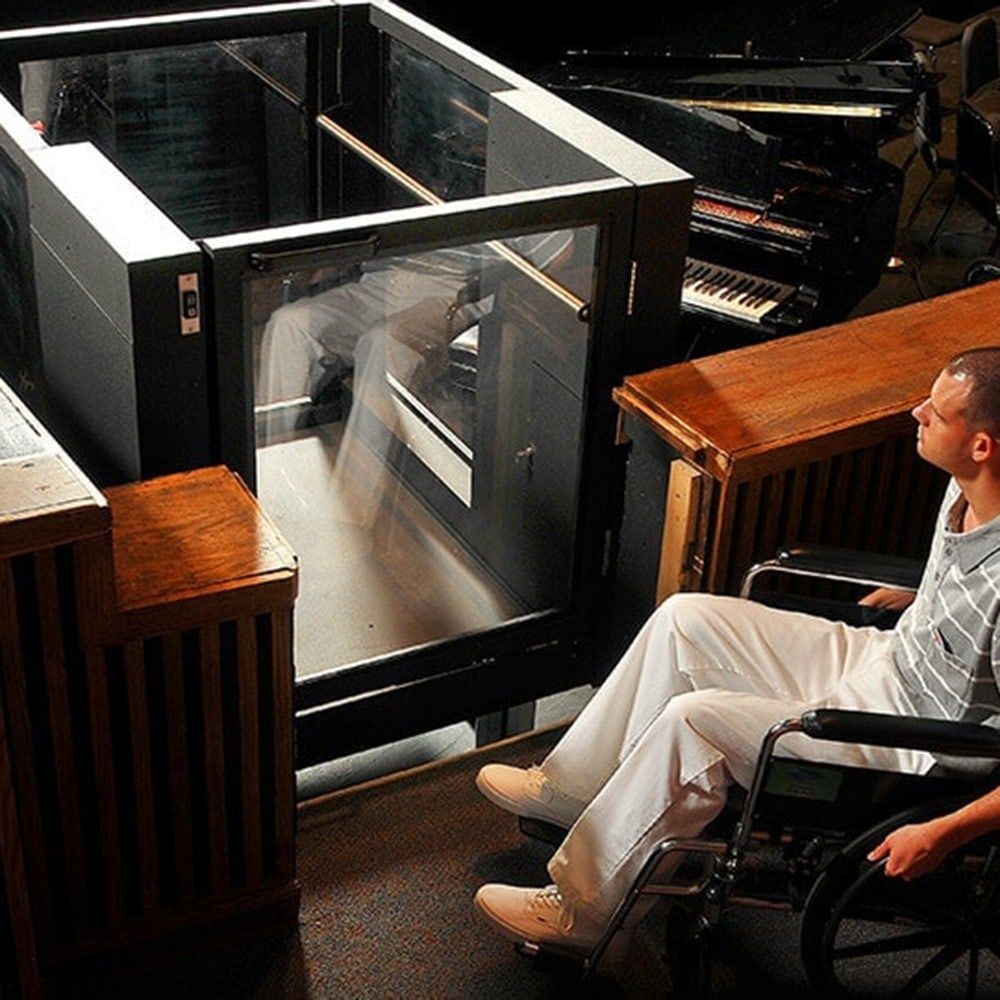
School buildings collect level changes: the stage in the cafetorium, a band room three steps down, a 1950s wing a half flight above the 1990s addition. A platform lift opens each of them to a student, a teacher, or a grandparent at the spring concert, and it does it without the construction an elevator needs. We installed a Savaria V-1504 with the commercial package for Northern Potter School District and handle the Labor and Industry permit and inspection on every school job.
The level changes we see in school buildings
Pennsylvania districts have buildings from every decade, often joined together. The result is a stage that only the able-bodied can reach, a library on a mezzanine, a locker room down a short flight, and an entrance that was never accessible because the original building predates the ADA. Schools are public entities, so new construction and alterations must provide an accessible route, and a platform lift is one of the tools the ADA Standards allow for performing areas and in existing buildings. Facilities directors usually know exactly where the problem is; what they need is a lift that fits the space, a realistic schedule, and someone to run the permit.
Northern Potter School District, in the northern tier, chose a Savaria V-1504 with the commercial package for that reason. The commercial package adds the enclosure, interlocked doors, and the control features the state expects in a school, and the lift was permitted and inspected through the Department of Labor and Industry before students used it.
Why school districts work with us
A district reference
Northern Potter School District's Savaria V-1504 with the commercial package, permitted and inspected through Labor and Industry before students rode it.
Permit started early
We file the state permit in the spring so a summer installation is not waiting on plan review. The lift is ordered only after approval.
Facilities-friendly
Drawings and a work-by-others checklist for your contractor, installation over a break, and service plans that include the periodic tests.
Commercial lifts in place
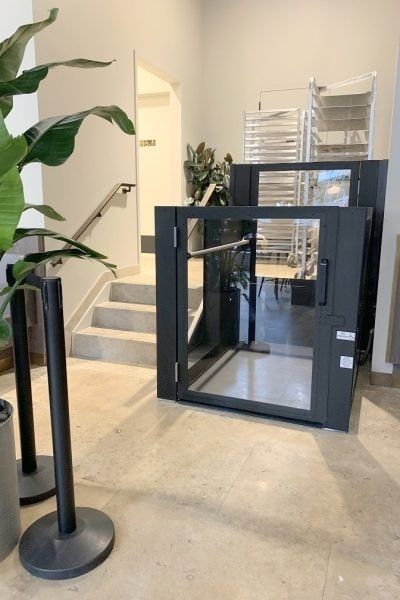
Protege, raised floor 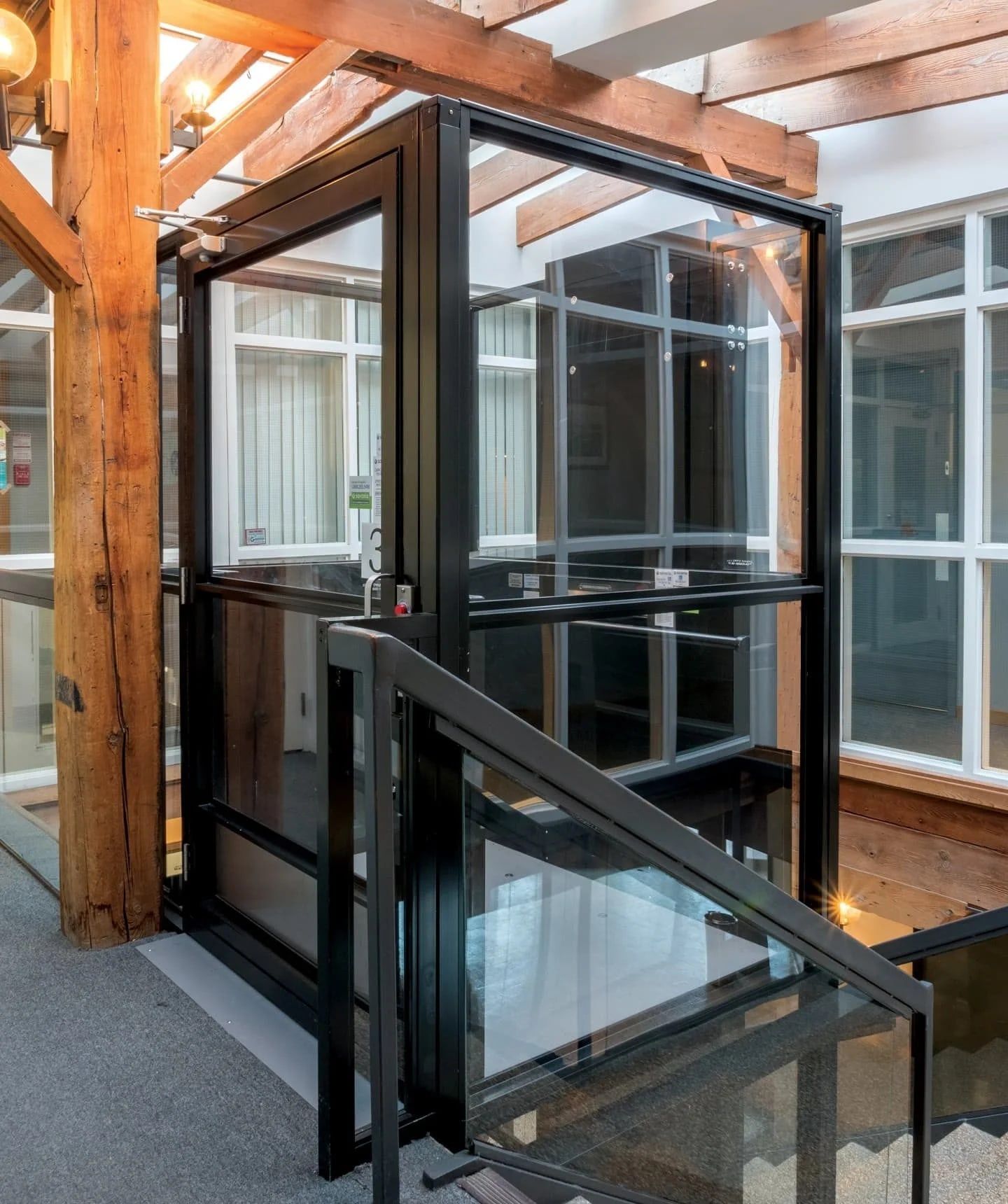
Enclosed V-1504 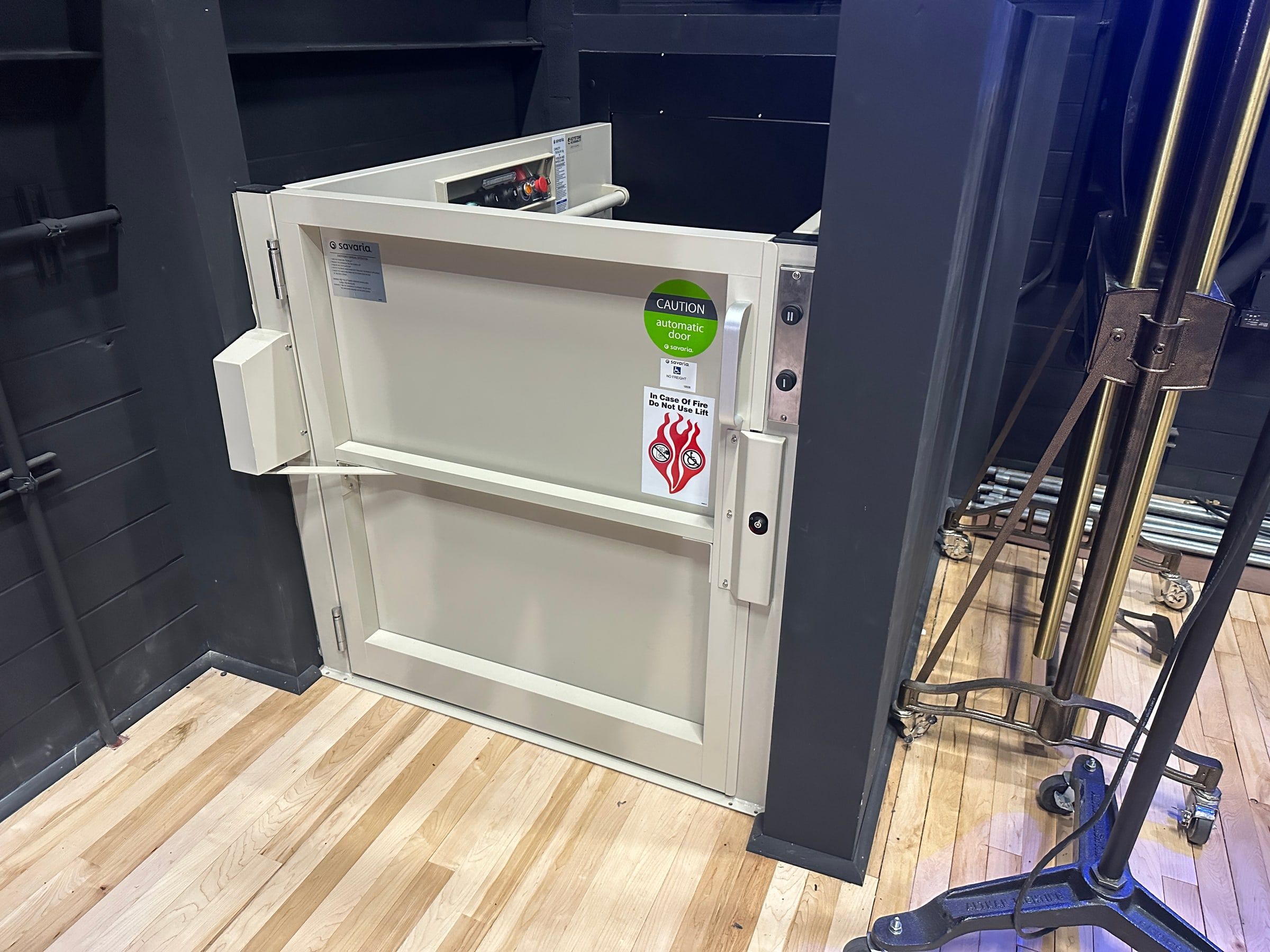
V-1504, Hershey, PA 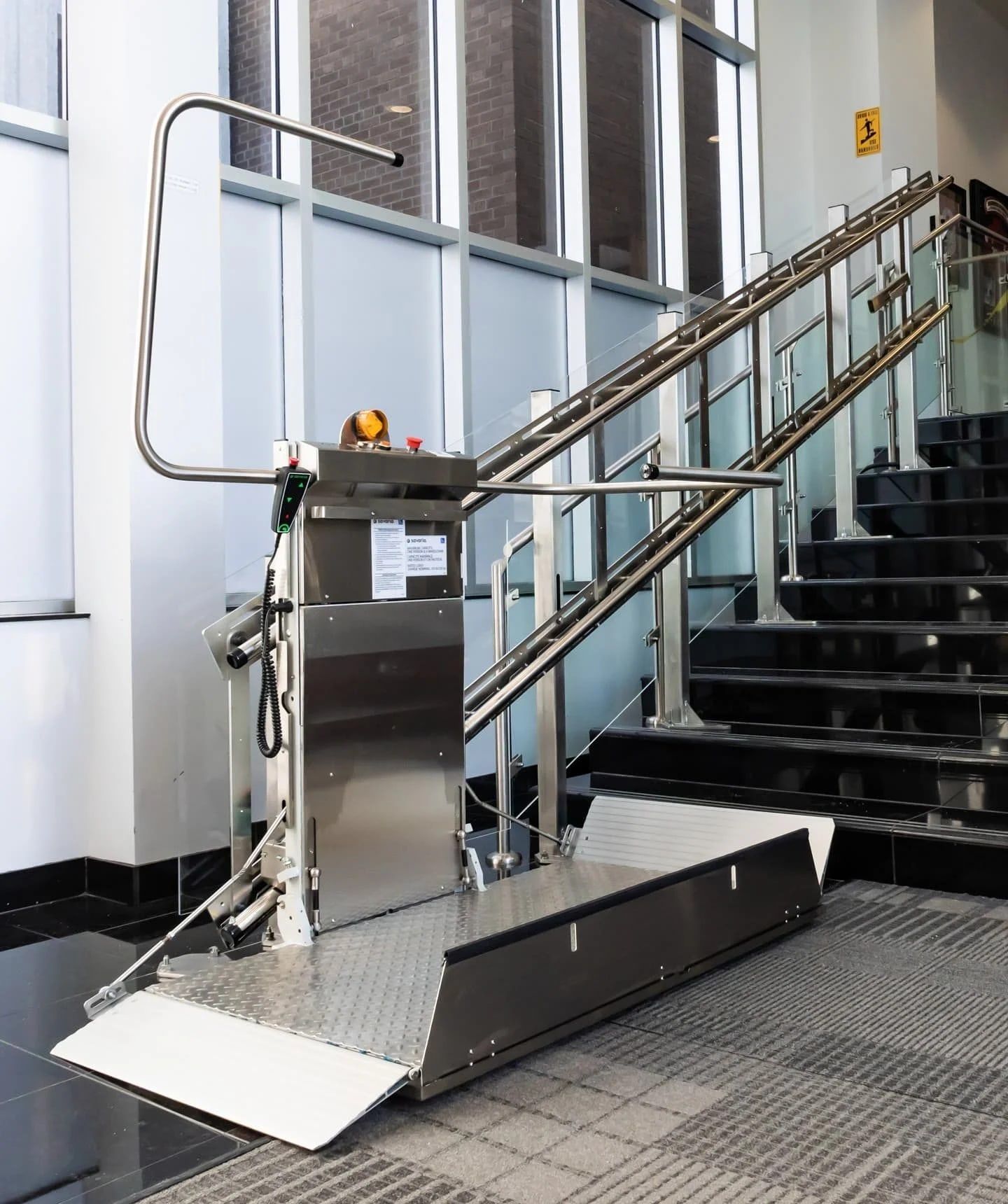
Delta inclined lift
Lift options for schools
Auditorium and cafetorium stages: the Ascension Protege for stages up to 42 inches and the Virtuoso up to 60 inches. No pit, no ramp across the stage, a guard that rises with the platform, and a portable version for districts that need to move a lift between buildings.
Split-level wings and mezzanines: the Savaria V-1504 with the commercial package, in a framed hoistway or enclosure, up to 14 feet of travel, two or three stops. The Prolift adds an enclosed cab and 1,000 to 1,400 lb capacity where the lift will also move equipment.
Entrances: an enclosed outdoor V-1504 on a pad beside the steps, or the Ascension Clarity where the district wants an enclosed, finished exterior lift.
Straight stairwells: the Savaria Delta inclined lift, which rides the stair on a rail and folds against the wall so the stair stays open for everyone else. Stair width and the remaining clear width when folded are checked against code at the site visit.
Cost: why districts choose a platform lift over an elevator
An elevator in an existing school means a hoistway through floors, a pit, a machine room, fire-rated construction, and a project that spans a summer at best. A platform lift needs a shallow pit or a short ramp, a dedicated circuit, and an enclosure or a simple framed hoistway. It is installed in two to five days, usually over a break, and it is almost always the lower cost alternative to a LULA for a one or two level problem. For a stage, the difference is even larger: an Ascension lift sits on the floor and needs no construction at all.
Commercial lifts cost more than a residential porch lift because of the enclosure, the doors, and the permit and inspection, and the number depends on travel, landings, and location. We quote in writing within 24 hours of the site visit with the permit and initial inspection as their own line, in a format that works for a board agenda or a purchasing file. Our post on vertical platform lift cost covers the factors.
Code, permits, and inspection for school lifts
School lifts follow ASME A18.1 as adopted by the Pennsylvania Uniform Construction Code, and the ADA Standards govern where a lift may serve as the accessible route and how it must operate: without an attendant, with unassisted entry and exit, and with controls a student can reach from a chair. The Department of Labor and Industry issues the state permit after plan review, a certified elevator inspector witnesses the acceptance test that our technician performs, and the Certificate of Operation is issued before the lift is used. Periodic inspections follow.
Schools often have a code official or third-party agency already engaged for the building, and we coordinate with them on the local permit while we file the state side. Key-switch operation, call stations, and door configurations are specified to what the inspector will look for, so the acceptance test is a formality rather than a surprise.
Scheduling around the school year
Most school lifts are installed over summer break, winter break, or a long weekend, with the hoistway or pad completed by the district's contractor from our drawings beforehand. The permit review should start in the spring for a summer install, because the state plan review and the lift's factory lead time set the calendar, not the two to five days we are on site. We work with facilities staff on access, dust control, and a walkthrough of the controls, manual lowering, and emergency stop for custodial staff.
We serve districts across central Pennsylvania from Etters, including Dauphin, Cumberland, York, Lancaster, Lebanon, Adams, Franklin, and Perry counties, and the northern tier on scheduled trips. Maryland districts in Carroll, Frederick, and Washington counties are on our routes as well. City pages: Harrisburg, Lancaster, York.
Our own installs
Recent platform lift installations
Our own platform lift installations, residential and commercial, pulled live from the jobs we finished most recently.
Google reviews
What customers say after the install
Pulled live from our Google Business Profile. We show the name the reviewer used, shortened to a first name and initial.
Start at the overview: commercial wheelchair lifts covers the lineup, the code, and the permit process in one place.
Other building types
- Wheelchair lifts for churches
- Wheelchair lifts for businesses
- Wheelchair lifts for municipal buildings
- Inclined platform lifts
Commercial lifts by city
- Commercial wheelchair lifts in Harrisburg, PA
- Commercial wheelchair lifts in Lancaster, PA
- Commercial wheelchair lifts in York, PA
Residential lifts are on the vertical platform lifts page and the full lineup on all platform lifts. Related reading: what a vertical platform lift is, ramp versus platform lift. Or call (717) 219-7976.
Straight answers
Schools: common questions
Can a platform lift serve a school stage under the ADA?
Yes. Performing areas are one of the situations where the ADA Standards allow a platform lift as the accessible route. The Ascension Protege and Virtuoso are built for exactly that, with no pit and no ramp.
What is the Savaria V-1504 commercial package?
The enclosure or hoistway configuration, interlocked landing doors, and the control features the state expects in a public building, added to the standard 750 lb hydraulic lift. It is what Northern Potter School District installed.
When should a district start if the lift needs to be in by September?
In the spring. The state plan review and the lift's factory lead time take longer than the installation itself, which is two to five days. We lay out the dates at the quote.
Can an inclined lift go in a school stairwell?
Often, on a straight flight. The folded platform must leave enough clear stair width for egress, which we check against code at the site visit. Where it does not fit, a vertical lift in a nearby location is the answer.
Do you handle the inspection?
Yes. Our technician performs the acceptance test while the certified inspector witnesses it, and we handle the Certificate of Operation paperwork. Service plans cover the periodic tests that follow.
Planning a lift for your building?
Call and tell us the rise, where it sits, and what the building is used for. We will come measure and send a written quote within 24 hours with the state permit and inspection included as their own line.