
Wood vs. Aluminum vs. Modular Wheelchair Ramp: Which Is Better?
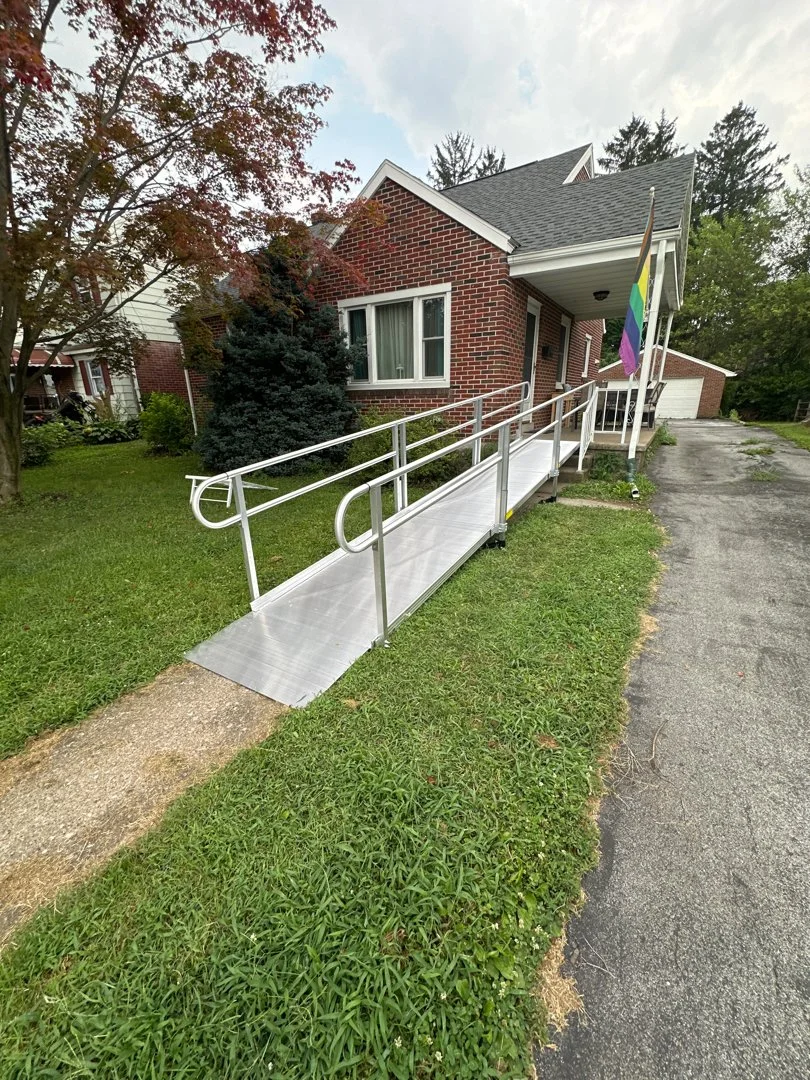
For most homes, a modular aluminum ramp is the better long-term choice. It costs a little more up front than a hand-built wood ramp, but it lasts twice as long, needs almost no upkeep, goes in far faster, and you can take it with you or reconfigure it later. Wood can still make sense in a few cases, so here's an honest look at all three so you can pick the right one for your home.
First, a quick word on what "modular" actually means
People sometimes talk about "aluminum" and "modular" as if they're two different things, but they're really the same family. A modular ramp is built from pre-engineered aluminum sections (ramp runs, platforms, handrails, legs) that bolt together on site like a big kit. So this comparison really comes down to two options: a custom wood ramp a carpenter builds board by board, and a modular aluminum ramp that arrives ready to assemble. (Poured concrete is a third option, but for most home entrances it's overkill, so we'll focus on the two families homeowners actually weigh.)
Cost: cheap now vs. cheap over time
This is where a lot of families get tripped up. On the day it's built, a wood ramp usually looks like the more affordable option because lumber is inexpensive. But a ramp isn't a one-time cost. It's something you'll rely on for years, and that's where the math flips.
Wood: Lower price on day one, but you'll pay again and again. Pressure-treated lumber needs sanding, sealing, and re-staining every couple of years to fight our Pennsylvania winters and summer humidity. Boards warp, nails pop, and the whole structure typically needs replacing in 10 to 15 years, sometimes sooner in rough weather.
Aluminum/modular: A bit more up front, but close to nothing after that. No sealing, no painting, no annual repair bill. Aircraft-grade aluminum doesn't rot or rust, and a quality modular ramp lasts 20 years or more.
When you add up two decades of staining, board swaps, and an eventual full rebuild, wood usually ends up costing more, not less. The pattern holds: wood is cheaper to buy and more expensive to own.
Durability and weather: Central PA is hard on ramps
Homeowners we help in Myerstown and out in Wyomissing deal with real winters, freeze-thaw cycles, road salt, and damp spring ground. That combination is tough on wood.
Wood absorbs moisture. Absorbed moisture leads to rot, mold, and algae, and a wet or algae-covered wood ramp gets slick fast. That's the opposite of what a mobility ramp is supposed to do. Sealing slows it down, but only if you stay on top of it every year or two.
Aluminum shrugs all of that off. It won't rot, rust, or soak up water, and most modular ramp surfaces have traction molded right into the metal (small raised ribs or a punched-in grip pattern) so they stay usable in rain and light snow. For a ramp that has to work in January as reliably as it does in July, that's a big deal.
Safety and ADA slope
Whatever the material, a ramp is only safe if the slope is right. The ADA guideline is a maximum 1:12 slope, meaning one foot of ramp length for every inch of rise, plus a minimum 36 inches of clear width and level landings where the ramp turns or meets a door.
Here's a practical edge modular ramps have: because the sections are pre-engineered, that 1:12 slope and the proper landings are built into the system, so a good installer hits code every time. With a custom wood ramp, the slope is only as accurate as whoever swings the hammer, and we've seen plenty of well-meaning DIY wood ramps that turned out far too steep to safely push a chair up. To size a ramp before anyone visits, our guide on How Long of a Wheelchair Ramp Do I Need? walks through the rise-to-length math.
Installation speed and permits
When a family calls us, it's often because someone is coming home from the hospital this week, not next month. Speed matters.
Wood: Usually means hiring a carpenter, waiting on a build, and 2 to 3 days of on-site construction. Because it's a permanent structure with footings, a local building permit is more likely to come into play.
Modular aluminum: Bolts together in hours, not days. Many straightforward installs are done same-day or next-day once we've measured. And because a modular ramp is typically treated as removable equipment rather than a permanent structure, it often doesn't require a local permit at all.
One important note on permits, because rules vary town to town across Central PA. Local permitting is the homeowner's or contractor's responsibility, since local costs and requirements differ from one municipality to the next. What we do is provide the documentation and engineered specs you'd need for that local filing, and for the modular ramps we install, a permit usually isn't required in the first place. Our post Do I Need a Permit for a Wheelchair Ramp? covers this in more detail.
Reusability: the quiet advantage
This is the factor people forget until they need it. A wood ramp is bolted and footed into your property, so when it's no longer needed it gets demolished and hauled away, and those footings can leave holes in the yard.
A modular aluminum ramp is the opposite. It comes apart in a few hours, leaves almost no trace, and can be relocated, resized, or reconfigured. If a loved one recovers after surgery, you can have it removed. If needs change and you need a longer run, we add sections instead of starting over. That flexibility is also why modular ramps can be rented, a genuinely affordable option for a short-term recovery. Wood simply can't do that.
So which should you choose?
Choose modular aluminum if you want the lowest lifetime cost, the fastest install, the least maintenance, guaranteed ADA slope, and the freedom to remove or reconfigure it later. For the large majority of homes we serve in Shippensburg, New Oxford, and across Adams, Cumberland, Lebanon, and Berks County, this is the one we recommend.
Choose wood only if you specifically want a built-in look that matches a deck, you're set on a permanent structure, and you're prepared for the ongoing upkeep.
At Keystone Accessibility, we install EZ-ACCESS modular aluminum ramps because they're reusable, rentable, permit-friendly, and built to last 20-plus years with basically no maintenance. We also service and remove ramps of any type. If you'd like a plain-English recommendation for your exact entrance, our Essential Guide to Modular Ramps is a good next read.
Frequently Asked Questions
How long do aluminum wheelchair ramps last compared to wood?
A quality modular aluminum ramp typically lasts 20 years or more with little more than an occasional sweep. Wood ramps generally last 10 to 15 years, and often less in harsh weather, and they need sanding, sealing, and staining every couple of years to get there.
Are aluminum ramps slippery when wet or icy?
Most modular aluminum ramps have traction built right into the surface, so they hold up well in rain and light snow. Wood tends to get slick as it absorbs moisture or grows algae. For heavy ice, we can also recommend simple winter-care steps.
Is a wood ramp cheaper than a modular ramp?
Wood is usually cheaper to build on day one. Over its life, once you add years of maintenance and an eventual rebuild, modular aluminum often costs less overall. It's a case of cheaper to buy versus cheaper to own.
Do I need a permit for a modular ramp in PA?
Often no, because modular ramps are typically removable rather than permanent. Requirements do vary by municipality. Local permitting is the homeowner's or contractor's responsibility, and we provide the paperwork and specs you'd need for it.
Get a Free Consultation
Not sure which ramp is right for your home? We'll come out, measure your entrance, and give you an honest recommendation with no pressure. Keystone Accessibility proudly serves homeowners across Pennsylvania and Maryland. Call us or reach out today for your free consultation, and let's get you safely in and out of your own front door.
