
Will a Stairlift Damage My Stairs or Walls? What Actually Happens During Installation
One of the first questions we hear from homeowners considering a stairlift is about the damage. "Will this ruin my beautiful hardwood stairs?" or "I'm renting—what happens when I move?" These are fair questions. Your home is your sanctuary, and you want to protect it. The good news: modern stairlift installation is designed to minimize impact on your home, and it's far less invasive than most people imagine.
How Stairlift Rails Are Installed (Not on Your Walls)
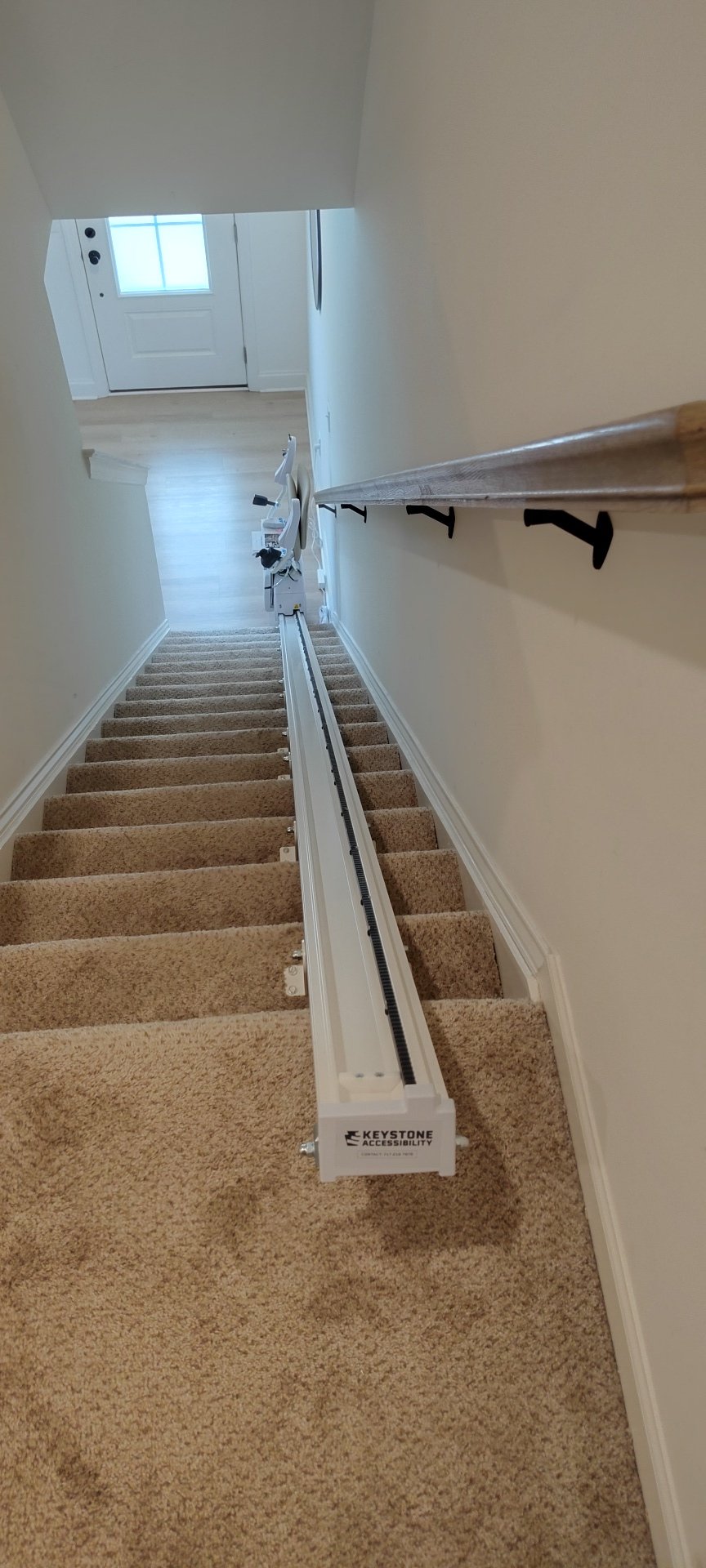
Let's start with the biggest misconception: stairlift rails don't get bolted to your walls. That's not how this works. The rail is mounted directly to the stair treads—the horizontal steps you walk on. This is actually what makes installation so reversible. Your walls stay completely untouched. Our team at Keystone has installed dozens of lifts in Pennsylvania homes, and one of the most common concerns about stairlift installation damage proves to be unfounded.
Here's what happens: our technicians use brackets spaced 12 to 16 inches apart to secure the rail to the tread. These brackets distribute the weight evenly, so you're not putting all the stress on one point. The fasteners powder coated aluminum or steel, so they won't rust or corrode over time. We use appropriately sized fasteners for your stair material—whether it's wood, concrete, or another surface.
What About Carpet, Hardwood, and Concrete?
Your stair material matters, and we adapt to it. On hardwood or wood stairs, we use screws that bite into the wood securely without splintering it. The installation is clean and controlled. On carpet, we may need to pull back a small section to access the stair tread beneath, but carpet can typically be smoothed back into place afterward. On concrete stairs, we use concrete anchors designed to hold without cracking the surface.
In all cases, the footprint of the installation is small. We're talking about a few screw holes per bracket, and these are easily filled or patched once the lift is removed.
What a Typical Installation Day Looks Like
Knowing what to expect can ease your mind. Here's how our installation process unfolds:
Inspection and measurement (30 minutes): Our technician measures your stairs, checks for obstacles, and verifies that the installation will work with your home's layout. They'll identify where brackets will go and discuss any concerns.
Preparation (15-20 minutes): We lay down protective coverings if needed, especially if carpet is involved. This keeps dust and debris contained.
Rail installation (1-2 hours): The rail is attached to the stair treads using our bracket system. We work carefully to ensure the rail is perfectly level and secure. This is the core of the installation.
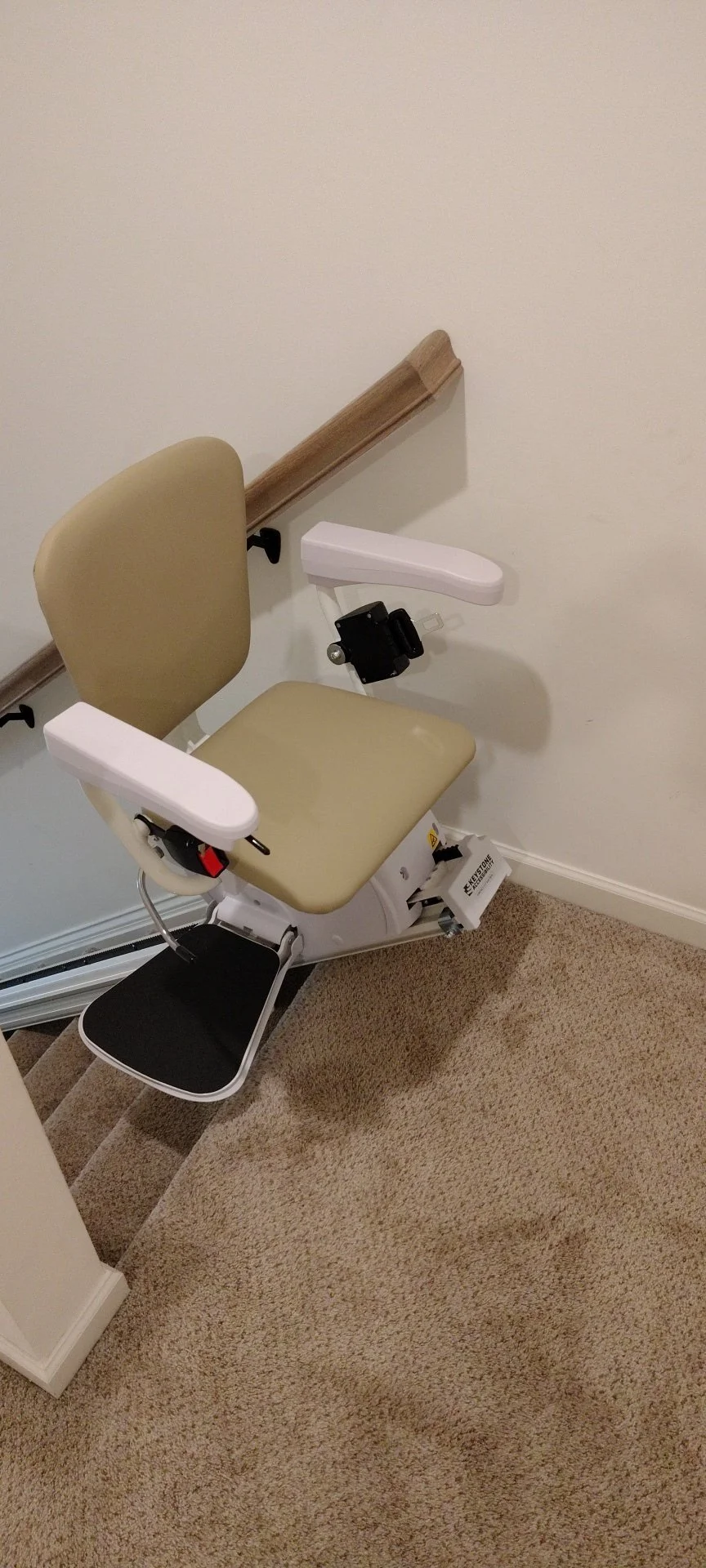
Seat and motor assembly (30-45 minutes): The seat, motor, and lift mechanism are installed onto the rail. We test everything multiple times to ensure smooth operation.
Safety testing and training (20-30 minutes): We put the lift through its paces—testing every button, every safety sensor, the backup power system. Then we walk you through how to use it safely.
Most residential installations are complete in a single day. You're not looking at weeks of construction mess.
Can You Remove a Stairlift? What Happens to Your Stairs Afterward
Life changes. Maybe mobility improves. Maybe you're selling your home. Whatever the reason, you might wonder if removing the lift will leave your stairs looking like a construction zone. It won't.
Removal is straightforward: we unbolt the rail and lift the mechanism away from the stairs. You're left with small screw holes in the treads. For hardwood stairs, we recommend a wood filler that matches your stain—a quick fill and sand, and the holes virtually disappear. They make matching wood plugs now as well for minimal sanding and stainging. For concrete stairs, a concrete filler works the same way. For carpet, the impact is minimal since the screw holes are beneath the surface or through it where it can be steam cleaned and fluffed to conceal.
This reversibility is important if you're renting or if you think you might move someday. A stairlift doesn't lock you into anything permanent.
What About Resale? Will This Hurt My Home's Value?
Here's something that surprises many homeowners: most don't experience any resale impact from a stairlift. In fact, many buyers—especially aging in place or families with mobility considerations—see it as a value-add. And if a future buyer doesn't want it, removal is quick and the stairs are restored with minimal effort.
Think about it this way: a stairlift solves a real problem for someone. For the right buyer, that's not damage—that's a feature.
Ready to Talk About Installation?
If you've been worried that a stairlift means tearing up your home, I hope this puts your mind at ease. The process is professional, non-invasive, and reversible. Our team at Keystone has installed dozens of lifts in Pennsylvania homes—everything from historic row homes to modern suburban houses—and we know how to work with your space.
The real question isn't "Will this damage my stairs?" It's "When can we install it so I can get my independence back?"
Ready to learn more? Check out our installation process, or contact us for a free consultation. We've installed stairlifts in Pennsylvania and Maryland homes from Harrisburg to Baltimore. Darrell and the team will walk you through everything and answer any questions you have about protecting your home while gaining your freedom.
