
Stairlift vs. Home Elevator: Which One Is Right for Your Home?
If you have a multi-level home in Pennsylvania and stairs are becoming a challenge, you're likely wondering: should you get a stairlift or a home elevator? Maybe it's harder to climb them than it used to be, or maybe someone in your family uses a wheelchair. Either way, you know something needs to change.
If you've been searching for how much a stairlift costs versus a home elevator, you're not alone — it's one of the most common questions we hear from homeowners. Both solutions can restore your freedom to move through your home safely and independently. But they're different in important ways—cost, space, installation, and what they're designed to do. Let's break down the real differences so you can make the right choice for your home and your life.
Cost: The Big Difference
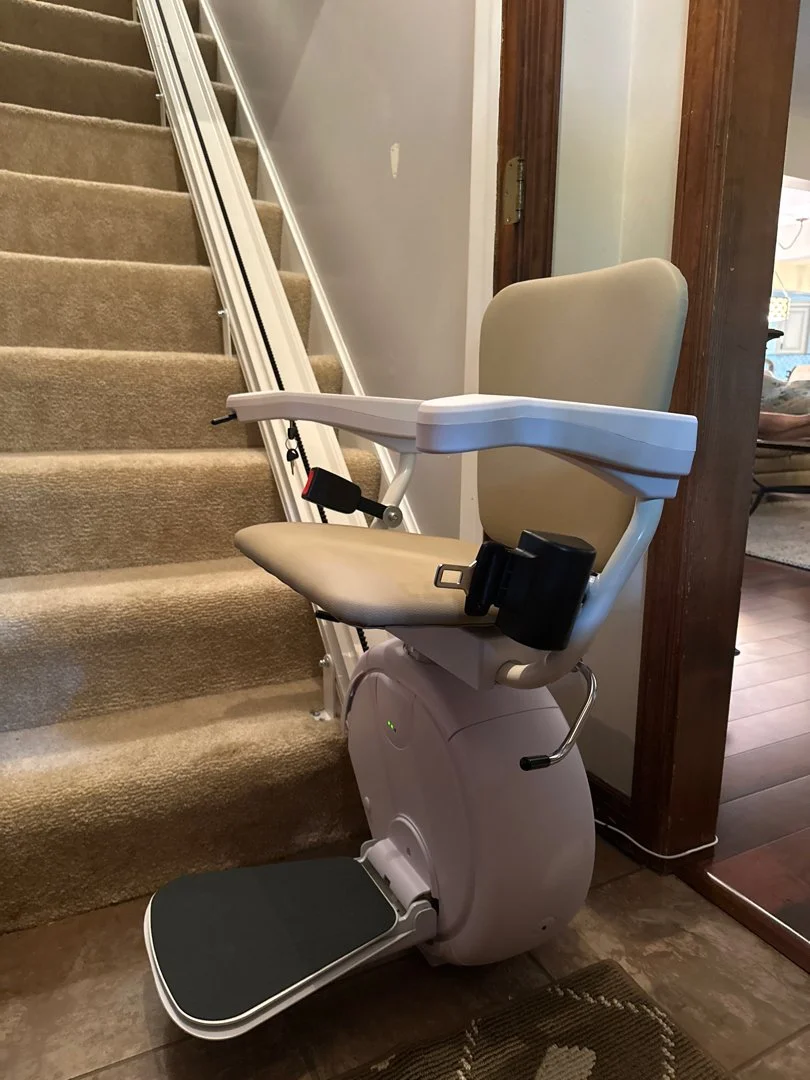
Stairlifts typically cost between $3,000 and $15,000 installed. Most people land somewhere in the $3300 to $5,000 range. You're paying for a motorized seat that rides up your existing staircase on a custom rail. Straight stairs are cheaper than curved ones, and basic models cost less than high-end options with extra features.
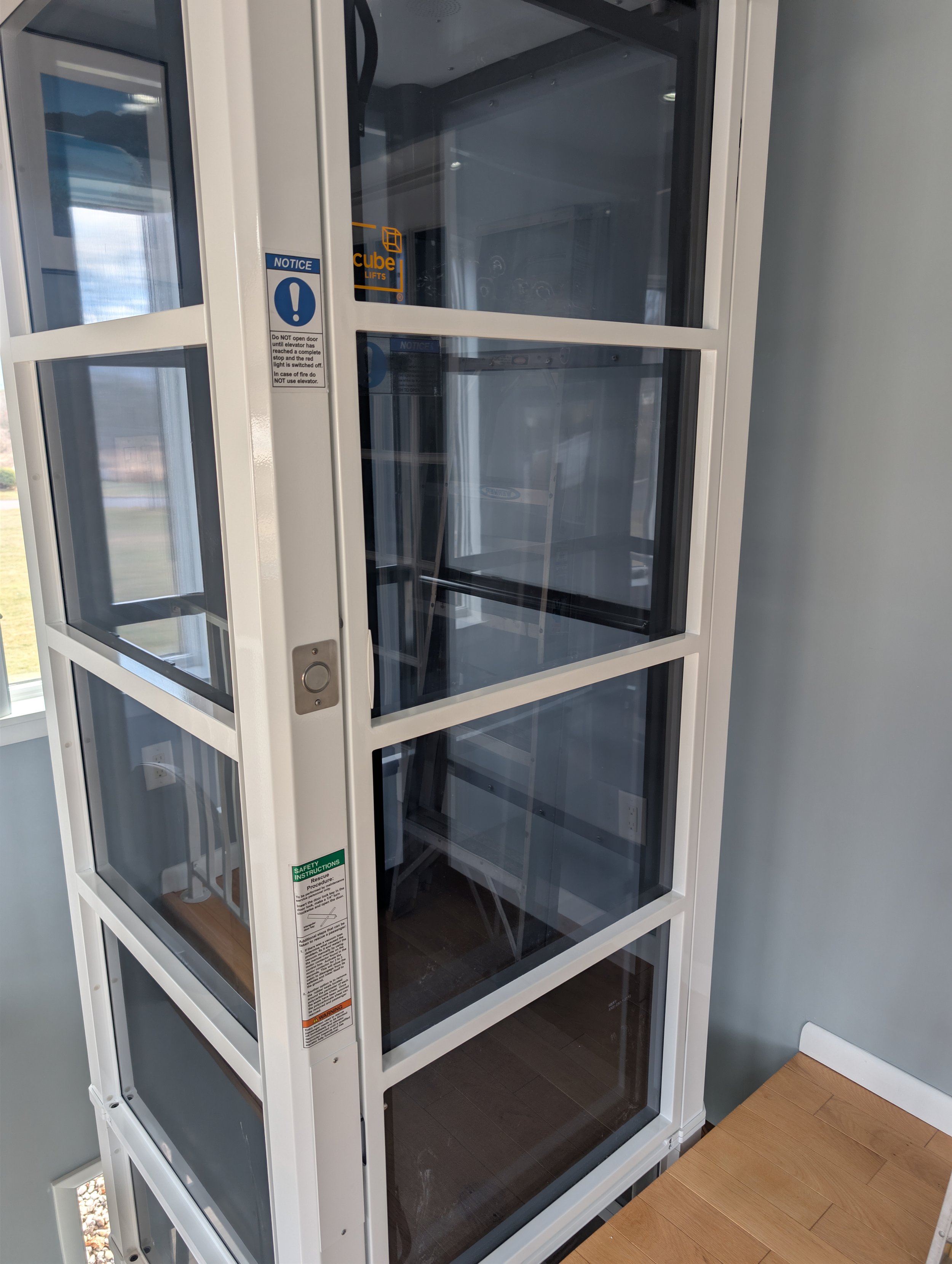
Home elevators run $25,000 to $60,000 or more, depending on size, capacity, and how many floors they serve. You're building a small room inside your home and installing mechanical equipment—that takes more materials, more labor, and more engineering.
Budget matters, and if cost is your primary concern, a stairlift is the more affordable path to mobility. But keep reading—price isn't the whole story.
Installation: Time and Disruption
Stairlift installation is fast. In most cases, we can have your stairlift up and running in a few hours. You're not tearing into walls or ceilings. We're mounting a rail to your existing staircase and installing the motorized seat. By tomorrow morning, you could be using it. Learn more about stairlift installation.
Home elevator installation takes days or even weeks. You need to frame out space, reinforce floors, run electrical and hydraulic lines, install the cab, and meet safety codes. It's serious construction. Your home is disrupted during the process. But once it's done, you've made a permanent upgrade to your home.
Space: What Do You Actually Have?
This is where the two solutions diverge most clearly.
Stairlifts don't require extra space. They fit on the staircase you already have. Straight staircases are ideal. Curved stairlifts work on bending staircases, though they're more complex to install. The only "footprint" is the seat and rail—and they take up the middle of your stairs, so people can still walk alongside the rail if they're able.
Home elevators need dedicated space. A residential elevator needs a shaft—typically a 4x4 or 5x5 foot area that goes from one floor to another. If you don't have that space available, an elevator isn't practical. Pneumatic elevators (like PVE models) use less space than traditional hydraulic elevators, but you still need room to work with.
The Wheelchair Question
Here's a practical distinction: Can the person using the lift walk, even with difficulty? If yes, a stairlift can work well. They climb onto the motorized seat and ride up the stairs.
Does the person use a wheelchair? A stairlift can still work, but being able to transition from the wheelchair to the seat needs to be safe. If doing this seat transfer is not possible or not safe, then you need either a home elevator (which fits a wheelchair inside the cab) or a vertical platform lift (which carries the wheelchair up a set of stairs).
Home Value: Does It Add Worth?
Stairlifts are portable. If you sell your home, you can take it with you or uninstall it. It doesn't significantly increase resale value, but it also doesn't decrease it. Most buyers won't notice it once you've removed it.
Home elevators are permanent. They're built into your home's structure. For some buyers—especially aging homeowners or those with mobility challenges—an elevator is a huge selling point. For others, it's irrelevant. Elevators typically recoup 50-75% of their cost in resale value, depending on your market. That's not a guarantee, but it's real.
If you're staying in your home long-term, the resale value question matters less. If you think you'll move in 5-10 years, an elevator is a bigger investment to justify.
Maintenance and Lifespan
Stairlifts are simple machines. They need occasional cleaning and lubrication. They last 10-15 years or more with basic care. Repairs are straightforward and affordable because the technology is proven.
Home elevators are more complex. They need professional maintenance and inspections—typically once a year. Repairs can be pricier because more systems are involved (hydraulics, electrical, safety mechanisms). They also last 20-30 years, so you're making a longer-term commitment.
A Simple Decision Guide
Choose a stairlift if:
Your budget is tight.
You have stairs but can still walk (with difficulty or assistance).
You want a quick installation with minimal disruption.
You're not sure how long you'll stay in your home.
You have limited extra space in your home.
Choose a home elevator if:
You're planning to stay in your home for many years.
Someone in your household uses a wheelchair.
You have multiple floors and want full access to all of them.
You have the space available and the budget for installation.
You want to maximize home resale value.
You want a permanent, elegant solution that becomes part of your home.
The Real Answer
Both stairlifts and home elevators can transform your home and your independence. The "right" choice depends on your specific situation: your mobility needs, your budget, your home's layout, and your long-term plans.
The good news? You don't have to figure this out alone. The team at Keystone Accessibility has 12+ years of experience helping homeowners from Harrisburg to Lancaster and down into Maryland make this exact decision. We can walk you through both options, measure your space, explain the true costs, and help you understand what makes sense for your home and your life.
Ready to explore your options?Contact us for a free, no-pressure consultation. We'll come to your home, listen to your needs, and help you find the solution that brings back your freedom to move through your home safely and independently.
