
Are Home Elevators Safe for Children? What Every Parent Should Know
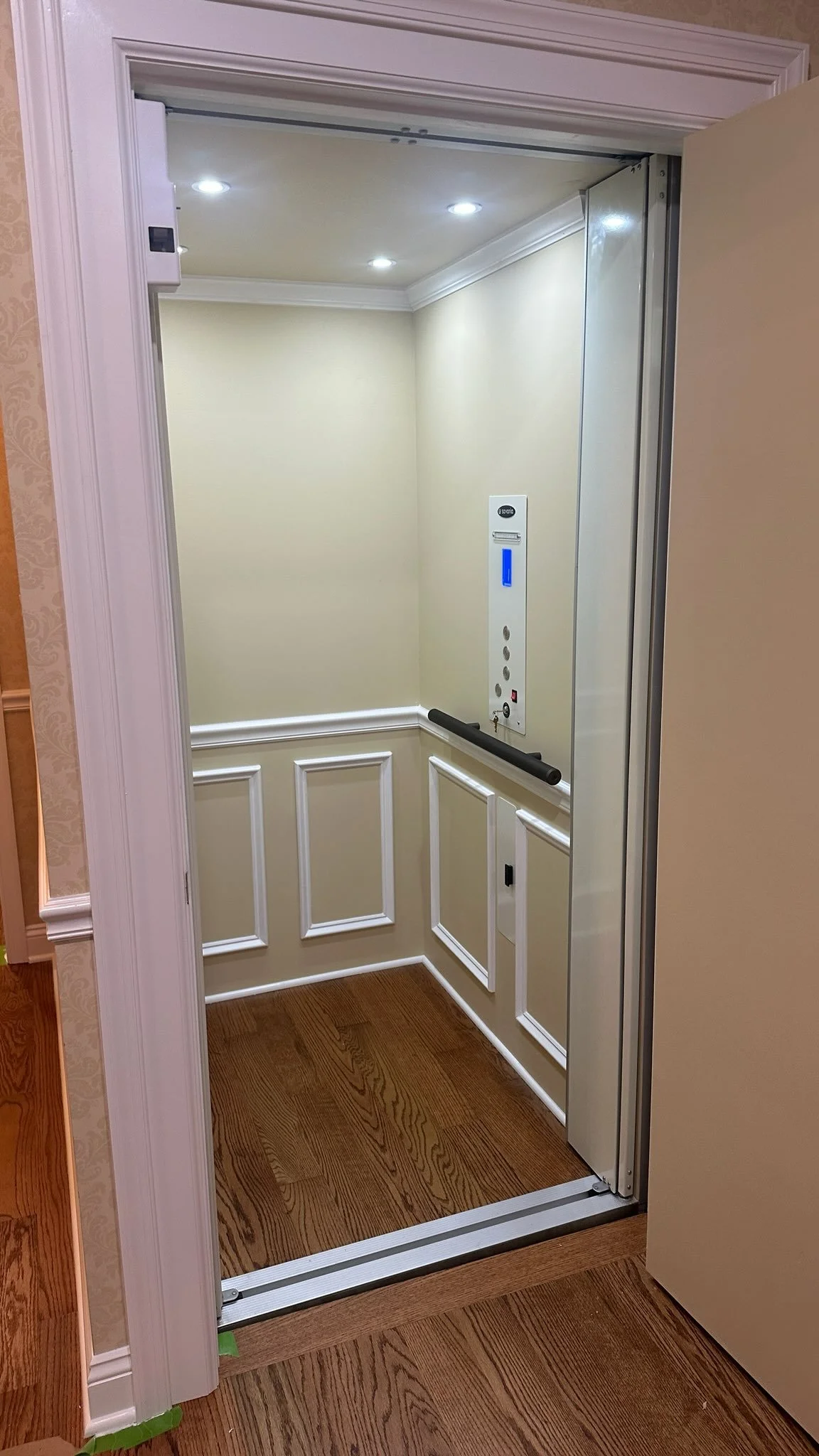
Yes, a home elevator can be very safe for a house with kids, but only when it's installed and maintained to current code. The one real hazard parents should know about is a gap that can form between the outer door and the elevator car on certain older designs. That gap is fixable, and newer elevators are built to avoid it entirely. Here's the honest, no-scare version of what's going on and how to make sure your family is protected.
The one risk worth understanding: the door gap
Most home elevators have two barriers at each floor. There's the swinging door you see from the hallway, called the hoistway door, and then the door or gate on the elevator car itself. On some elevators there's a small space between those two once the hoistway door is closed.
If that space is too deep, a young child can slip into it, the hoistway door latches behind them, and the elevator can then be called to another floor with the child still in the gap. It's rare, but it has caused serious injuries and at least one death. In the summer of 2021, three children were entrapped this way, and a seven-year-old boy died in an elevator at a vacation rental in North Carolina, according to the U.S. Consumer Product Safety Commission.
That tragedy is why this became a national issue. In 2022 the CPSC and three major manufacturers (Bella Elevator, Inclinator, and Savaria) announced voluntary recalls covering roughly 69,000 residential elevators. The agency also issued a public warning about a fourth company, Waupaca, that would not cooperate. If you already own an older home elevator, this is the single most important thing to check.
What "safe" actually means: the 3/4 and 4 rule
The current safety standard, ASME A17.1, sets two clear limits that a qualified installer or inspector measures:
The space behind the hoistway door, from the door to the edge of the landing sill, should be no more than 3/4 inch on elevators built to the 2016 code or later.
The gap between the hoistway door and the car door or gate should be no more than four inches.
Keep both of those within limits and there simply isn't enough room for a child to be trapped. That's the whole idea behind the numbers. Older elevators were sometimes built when a three inch gap was allowed, which is why so many existing units needed attention.
How an unsafe gap gets fixed
The good news is that a dangerous gap almost never means replacing the elevator. There are two proven fixes, and a technician can usually handle either one in a single visit:
Space guards. These are firm panels or baffles added to the back of the hoistway door. They shrink the open space so a child can't fit into it. The recalling manufacturers provided space guards free of charge, and many are still available at no cost for affected models.
Electronic monitoring. A sensor system detects when something is in the gap and keeps the elevator from moving until the space is clear.
If you own an older elevator, the right move is to stop letting children ride or play near it until a qualified elevator technician inspects the door spacing to the latest ASME A17.1 standard. We do this kind of inspection and gap correction for families throughout our service area, whether we originally installed the unit or not.
Beyond the gap: the other safety layers
A properly installed home elevator has several built-in protections that make it far safer than stairs for a child who's going to be in the house either way:
Doors and gates that must be fully closed before the car will move, so it can't run with an opening exposed.
Interlocks that keep the hoistway door locked unless the car is actually at that floor, which prevents a fall into an open shaft.
A controlled, gentle descent and a battery backup so no one is stranded if the power goes out. We cover that in detail in our post on whether you'll get stuck in your home elevator during a power outage.
Simple, lockable controls and a call station, so you decide when the elevator is available to little ones.
None of this replaces the basic house rule that an elevator is not a toy, but good hardware backs up good supervision.
Why the design matters: a note on pneumatic vacuum elevators
Here's where the type of elevator really counts. A pneumatic vacuum elevator, the kind we install often because it needs no pit, no shaft, and no machine room, works differently from a traditional cabled elevator. The car rides inside a sealed cylinder, and the cab has a single door that only opens when the car is level with the floor. There's no separate swinging hoistway door with a hidden space behind it, so the specific door-gap trap that drove the recall doesn't exist in that design.
That doesn't mean any one product is the only safe choice. Traditional and cable-drive elevators are perfectly safe when built and maintained to code. But if child safety is high on your list, it's worth asking about how a given elevator handles doors and gaps before you buy. We walk families through those trade-offs all the time, and we sell both styles, so we can give you a straight comparison. Our post on the pneumatic vacuum versus traditional home elevator breaks down the differences in plain language.
We see this question a lot from parents and grandparents across Central Pennsylvania, from Hummelstown here in Dauphin County to York, and from smaller communities like Beavertown in Snyder County and Mifflinburg up in Union County. Wherever you are, the answer is the same: the machine can be very safe for kids, and getting it inspected is the way to know for sure.
Frequently asked questions
How do I know if my home elevator is part of the recall?
Check the manufacturer and model, then look up the CPSC recall notices for Bella, Inclinator, and Savaria, or the Waupaca warning. If you're not sure, we can identify your unit and measure the door spacing during an inspection.
Is the space guard fix expensive?
For the recalled brands, space guards were offered free of charge, and installation help was available at no cost. Even outside those programs, correcting a gap is a small job compared with the elevator itself. We'll give you an exact quote after we see the unit.
At what age is a child safe to ride a home elevator?
There's no single age. The safe approach is to treat the elevator like any powered equipment: young children ride only with an adult, and controls stay locked when kids are home alone near it. Correct door spacing removes the most serious hazard regardless of age.
Can you inspect an elevator you didn't install?
Yes. We service and inspect all makes and models throughout Pennsylvania and Maryland, not just the ones we put in.
Get a free consultation
If you have kids or grandkids in the house and you're weighing a home elevator, or you already own one and want peace of mind, let's talk. Keystone Accessibility will inspect your door spacing, explain your options in plain English, and help you choose a setup that fits your family. We serve homeowners across Pennsylvania and Maryland, and the consultation is always free. Call us at (717) 219-7976 or reach out through keystoneaccessibility.com to schedule.
